As the calendar turns toward mid-February, Wall Street is fixated on a single data point: the U.S. Census Bureau’s Advance Monthly Sales for Retail and Food Services report for January 2026. Following a period of intense economic volatility and a Federal Reserve that has shifted into a "cautious pause," this upcoming release, scheduled for February 17, 2026, is expected to confirm whether the American consumer remains the economy’s primary engine or if the fuel is finally running dry.
The stakes are unusually high as the market grapples with a paradoxical landscape. While consumer confidence indices plummeted to a decade-low of 84.5 in January, "hard" spending data has remained surprisingly buoyant, with the Johnson Redbook Index showing a 7.1% year-over-year increase in same-store sales late last month. This disconnect suggests a psychological "vibecession" that has yet to fully manifest in the checkout line, making the official January retail figures the definitive judge of the market's trajectory for the first half of 2026.
The Data Behind the Drama: A Tightrope Walk for the Fed
The upcoming report follows a stronger-than-expected November and December 2025, which saw a 0.6% month-over-month increase in retail activity. This resilience was a double-edged sword; it staved off recession fears but also fueled "sticky" inflation concerns, which sat at 2.7% as of December 2025. In the most recent Federal Open Market Committee (FOMC) meeting on January 28, 2026, the Federal Reserve maintained the federal funds rate at 3.50%–3.75%. This decision highlighted the Fed's hesitance to cut further until they see "clean" data—a task made difficult by a federal government shutdown in late 2025 that distorted previous months' reporting.
The consensus for the January 2026 report is a modest 0.5% month-over-month increase. Investors are looking for a "Goldilocks" number: high enough to signal growth, but low enough to reassure the Fed that consumption isn't reigniting inflationary pressures. A significant miss on the downside could spark fears of a delayed "hard landing," while a massive beat might force the Fed to keep interest rates elevated for much longer than the market’s current expectation of a June rate cut.
Winners and Losers: The Great "Flight to Value"
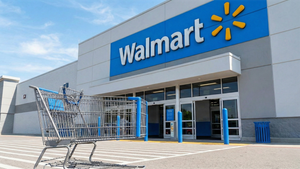
The 2026 retail environment has created a stark divide between companies providing essentials and those relying on discretionary spending. Walmart Inc. (NYSE: WMT) stands out as a clear frontrunner in this climate. Having recently joined the Nasdaq-100, the retail giant is capturing a new demographic: middle-to-high income households who are "trading down" from premium grocery stores to save on household basics. Their integration of Google’s Gemini AI for instant checkout is also driving operational efficiencies that smaller competitors struggle to match.
Conversely, Target Corporation (NYSE: TGT) finds itself in a transformational struggle. While the company has beaten earnings per share estimates recently, its revenue has lagged due to its heavy exposure to discretionary categories like home decor and apparel. Target has committed $5 billion in capital expenditures for 2026 to modernize its logistics, but the upcoming retail data will reveal if consumers are willing to return to "wants" rather than just "needs." Similarly, The Home Depot, Inc. (NYSE: HD) has issued a cautious 2026 outlook of 0% to 2% comparable sales growth, as high interest rates continue to suppress the housing market and major home improvement projects.
On the digital front, Amazon.com, Inc. (NASDAQ: AMZN) remains a dominant force, though its narrative has shifted from pure growth to extreme efficiency. With operating margins hitting 12.0%, Amazon's upcoming Q4 earnings and the January spending data will show if its logistics overhaul is enough to offset a broader slowdown in e-commerce growth, which is projected to moderate to 3.5% this year. Meanwhile, Costco Wholesale Corporation (NASDAQ: COST) continues to serve as a defensive fortress, reporting a staggering 8.5% year-over-year sales growth in December and a membership base that has swollen to over 81 million, proving that the bulk-buy model is the preferred bunker for the 2026 consumer.
Broad Significance: Navigating the 2025 Shutdown Shadow
The wider significance of the January 2026 data cannot be overstated, primarily because of the historical baggage it carries. The late 2025 government shutdown created a "data fog," making it nearly impossible for economists to gauge the true state of the labor market and price stability during the fourth quarter. As a result, the January figures represent the first "clean" look at the post-shutdown economy.
Furthermore, this event fits into a broader global trend of "value-based consumption." We are seeing a structural shift where brand loyalty is being replaced by price sensitivity across all income brackets. If the retail sales data shows a sharp decline in dining out and luxury goods, it will signal that the "excess savings" era of the mid-2020s has officially ended. This would likely trigger a rotation in the stock market out of high-multiple growth stocks and into defensive staples and utilities—a trend that has already begun to simmer in early 2026.
What Lies Ahead: Strategic Pivots and Market Scenarios
Looking forward, the retail industry faces two primary scenarios. In the first—the "Resilient Stabilization" scenario—consumer spending continues to grow at a clip of 0.3% to 0.5% monthly. This would allow the Fed to execute a controlled series of rate cuts starting in the summer, potentially pushing the S&P 500 to new heights as borrowing costs fall. Retailers would focus on "omnichannel" expansion, blending physical stores with hyper-fast delivery to capture the remaining consumer dollars.
The second, more concerning scenario is a "Consumer Burnout." If January data comes in flat or negative, it would suggest that the cumulative impact of 3.5% interest rates and persistent 2.7% inflation has finally broken the consumer's back. In this case, we should expect a pivot toward aggressive discounting and a price war among major retailers. Companies like Amazon and Walmart would likely use their massive balance sheets to squeeze out smaller players, leading to further industry consolidation.
Market Wrap-Up: What Investors Must Watch
The January retail sales report is more than just a monthly update; it is a referendum on the "soft landing" hypothesis that has underpinned market valuations for the last year. Investors should keep a close eye on two specific sub-metrics within the report: the "Control Group" sales—which strip out volatile categories like autos and gas—and food services spending. The former provides the best gauge of core consumer strength, while the latter is a key indicator of discretionary "fun" money.
Moving forward, the narrative for 2026 will be defined by the tension between pessimistic sentiment and resilient spending. While the "vibes" are low, the wallet remains open for now. However, with the Fed watching every swipe of the credit card with hawk-like intensity, the upcoming mid-February release will determine if the market’s early-year optimism is well-founded or if a more defensive posture is required for the months ahead.
This content is intended for informational purposes only and is not financial advice.