The global financial landscape was thrown into chaos on January 20, 2026, as President Donald Trump intensified his administration’s pursuit of Greenland, issuing a sweeping tariff ultimatum against eight European nations. The announcement, which ties the continuation of transatlantic trade relations to the "complete and total purchase" of the Arctic territory, sparked a massive sell-off in equity markets. By the closing bell, the Dow Jones Industrial Average (DJIA) had plummeted more than 870 points, as investors grappled with the prospect of a fractured NATO alliance and a multi-front trade war.
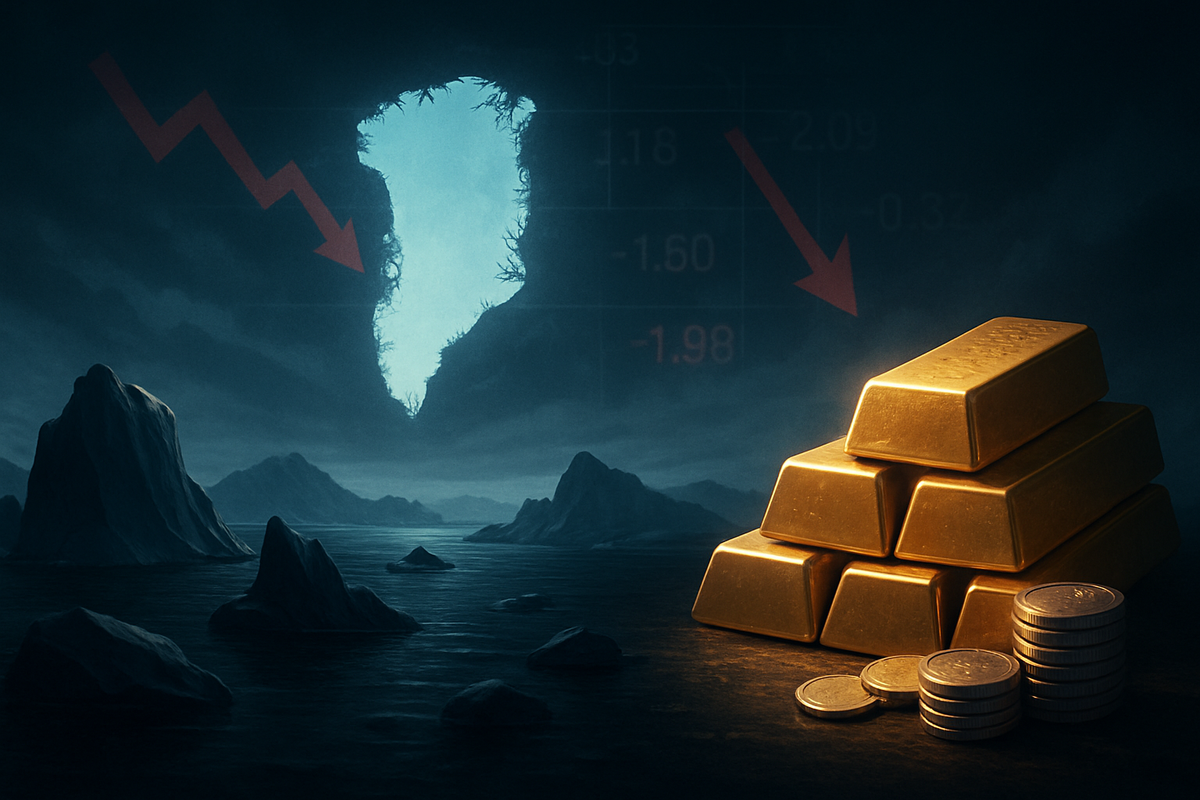
The immediate implications of the "Greenland Tariffs" were felt most acutely in the commodities and currency markets. As the dollar and the euro showed signs of instability amid the diplomatic rift, capital fled to traditional safe havens. Gold prices shattered historical records, surging past $4,700 per ounce, while silver prices reached an unprecedented $95 per ounce. This "flight to quality" underscores a growing market consensus that the geopolitical stability of the North Atlantic—a cornerstone of global trade since 1945—is now under fundamental threat.
The Greenland Ultimatum: A Timeline of Escalation
The market turmoil of January 20 was the culmination of a rapidly deteriorating diplomatic situation that began in early 2025. Following his re-election, President Trump reignited a proposal first floated in 2019 to acquire Greenland from the Kingdom of Denmark. While the initial rhetoric was framed as a strategic real estate deal, it evolved into a hardline national security directive by late 2025. The U.S. administration cited the urgent need to secure Greenland's massive deposits of Rare Earth Elements (REEs) and to preempt Russian and Chinese military expansion in the melting Arctic lanes.
The flashpoint occurred on January 17, 2026, when the White House officially designated eight nations—Denmark, Norway, Sweden, Finland, the United Kingdom, France, Germany, and the Netherlands—as "uncooperative trade partners" for their opposition to the acquisition and their participation in Danish-led Arctic military exercises. The President announced a 10% baseline tariff on all imports from these nations, scheduled to take effect on February 1, with a secondary "trigger" raising the rate to 25% on June 1 if "meaningful progress" on the Greenland transfer is not achieved.
As markets opened on January 20 following the holiday weekend, the reality of the ultimatum set in. The Dow Jones Industrial Average fell 1.8% to close at 48,488.59, while the S&P 500 dropped 2.1%. European markets fared even worse, with the DAX and CAC 40 recording their sharpest single-day losses since the early 2020s. The VIX, often referred to as the market's "fear gauge," spiked to 20.69, reflecting a level of uncertainty not seen in years.
Winners and Losers in the "Greenland Trade"
The fallout from the tariff threat has created a stark divide between industries reliant on transatlantic supply chains and those positioned as defensive hedges. Among the primary casualties are high-end European exporters and pharmaceutical giants. Novo Nordisk (NYSE: NVO), the Danish pharmaceutical powerhouse, saw its U.S.-listed ADRs fall 2.65% on January 20. With nearly 30% of its revenue derived from the U.S. market, the prospect of a 25% tariff on its life-saving GLP-1 medications presents a significant headwind for the company's 2026 guidance. Similarly, French luxury conglomerate LVMH (OTC: LVMHF) faced selling pressure as investors feared that "prestige goods" would be the first target of retaliatory EU duties.
Conversely, the mining sector emerged as the day's clear winner. Newmont Corporation (NYSE: NEM) and Barrick Gold Corporation (NYSE: GOLD) saw their stock prices rally by 3.0% and 3.5%, respectively, as they benefited from the historic surge in bullion prices. Newmont's stock crossed the psychological $150 barrier, a milestone driven by the global "Sell America, Buy Gold" sentiment. Investors are increasingly viewing these companies not just as miners, but as proxies for the physical assets that are currently shielding portfolios from the volatility of fiat currencies.
The shipping industry presented a more complex picture. A.P. Møller - Mærsk A/S (OTC: AMKBY) managed a 2.28% gain on the day, despite the diplomatic tensions. The company’s resilience was attributed to its strategic pivot toward resuming Suez Canal routes, which offset some of the geopolitical risk associated with its U.S. military logistics contracts. However, technology leaders like Nvidia (NASDAQ: NVDA) and Tesla (NASDAQ: TSLA) were caught in the crossfire, falling over 2% as analysts warned that a prolonged trade war with the EU could disrupt the flow of specialized European manufacturing equipment essential for semiconductor and battery production.
Geopolitical Friction and the New Trade Order
The Greenland crisis is more than a simple territorial dispute; it represents a fundamental shift in the global trade order. For decades, the GIUK (Greenland-Iceland-UK) Gap has been a pillar of Western maritime security. By using trade tariffs as a lever for territorial acquisition, the U.S. is challenging the traditional norms of sovereignty within the NATO alliance. This move fits into a broader trend of "resource nationalism," where access to critical minerals—like the 36 million tonnes of REEs estimated to be in Greenland—is prioritized over established diplomatic protocols.
The potential ripple effects are vast. If the U.S. proceeds with the 25% tariff escalation in June, European partners have hinted at a "Digital Services Tax" and specific tariffs on U.S. agricultural exports and aerospace components. This mimics the trade skirmishes of 2018-2019 but with much higher stakes, as the 2026 conflict involves direct threats to the sovereign integrity of a NATO ally. Historically, such tensions have led to long-term "de-risking" strategies, where companies permanently move production facilities to avoid tariff zones, potentially leading to a more bifurcated and inefficient global economy.
Furthermore, the regulatory implications are profound. The Danish government has reiterated that "Greenland is not for sale," a stance supported by the European Commission. This sets the stage for a protracted legal battle within the World Trade Organization (WTO), although the effectiveness of the body remains in question following years of U.S. challenges to its appellate process. The current situation echoes the purchase of Alaska or the Louisiana Purchase, but in a modern era where the inhabitants of the territory—the Greenlandic people—possess a high degree of self-governance and have shown no interest in a change of administration.
Looking Ahead: The June Deadline
In the short term, the market will likely remain in a state of "wait and see," with high sensitivity to any rhetoric coming from Copenhagen or Washington. The February 1 implementation of the 10% tariff is now viewed as an inevitability by most analysts. The real question for the second quarter of 2026 is whether a diplomatic "off-ramp" can be found before the June 1 escalation. Strategic pivots are already underway; many U.S. importers are reportedly front-loading shipments from the affected eight countries to build inventories before the tariffs hike.
Market opportunities may emerge in domestic U.S. industries that compete with European imports, such as specialty chemicals and industrial machinery. However, these gains may be offset by the inflationary pressure that tariffs will likely exert on U.S. consumers. If the "Greenland Trade War" continues to escalate, the scenario of gold reaching $5,000 per ounce—once considered a fringe projection—could become a reality by the summer. Investors should also watch for a potential "Arctic Premium" in energy and defense stocks, as the region becomes increasingly militarized.
Summary and Investor Outlook
The market sell-off of January 20, 2026, serves as a stark reminder of how quickly geopolitical ambitions can disrupt global financial stability. The primary takeaway for investors is the renewed importance of diversification into hard assets. The 870-point drop in the Dow and the simultaneous record highs in gold and silver illustrate a market that is no longer pricing in "business as usual" for transatlantic relations. The move by the U.S. to use trade as a blunt instrument for territorial gain has introduced a level of systemic risk that traditional equity portfolios are ill-equipped to handle.
Moving forward, the market will be hyper-focused on the response from the "Greenland Eight," particularly Germany and the UK. Any sign of a unified European retaliatory tariff package could trigger another leg down in global equities. For the coming months, investors should closely monitor the "Arctic spread"—the price difference between safe-haven assets and trade-sensitive stocks. While the headlines remain dominated by the $4,700 gold price, the long-term impact on the NATO alliance and the structure of the global supply chain may be the most significant legacy of the January 20 sell-off.
This content is intended for informational purposes only and is not financial advice.