As 2025 draws to a close, the U.S. financial markets have proven to be a theater of extraordinary resilience and historic milestones. Despite a mid-year "tariff shock" that briefly wiped out trillions in market value and a prolonged government shutdown that tested investor patience, the major indices are finishing the year at or near record highs. On this December 26, 2025, investors are reflecting on a year defined by the relentless expansion of Artificial Intelligence (AI) and a definitive pivot in monetary policy by the Federal Reserve.
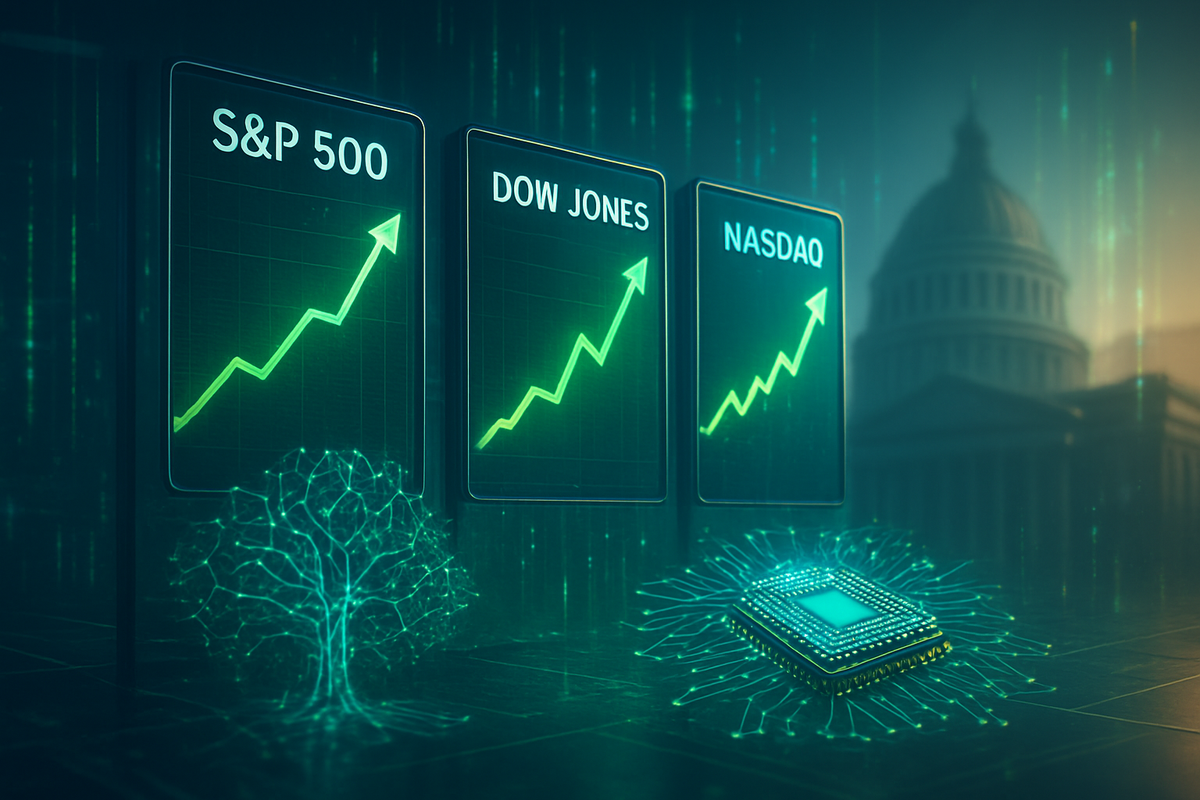
The year-end tally tells a story of significant growth across the board. The S&P 500 is set to close the year at approximately 6,932.05, marking a robust annual gain of nearly 19%. The Dow Jones Industrial Average followed suit, climbing roughly 13% to finish at 48,731.81. However, the Nasdaq Composite once again claimed the crown, surging over 20% to reach 23,613.31, propelled by a technology sector that refused to cool down despite heightened regulatory scrutiny and geopolitical tensions.
The 2025 Market Odyssey: From Tariff Shocks to Fed Pivots
The path to these record highs was anything but linear. The defining moment of the year occurred on April 3-4, 2025, an event now known as the "April Tariff Storm." Following an executive order for "reciprocal tariffs," the markets plummeted, with the S&P 500 dropping 10.5% in just 48 hours, erasing an estimated $6.6 trillion in global wealth. This volatility was further compounded by a 43-day U.S. government shutdown that concluded in October, which delayed critical economic data and left the market flying blind for weeks.
However, the narrative shifted dramatically in the second half of the year. The Federal Reserve, led by Chair Jerome Powell, initiated a long-awaited easing cycle as inflation finally stabilized within target ranges. The Fed implemented three consecutive 25-basis-point rate cuts in September, October, and December, bringing the federal funds rate down to the 3.50%–3.75% range. This liquidity injection, combined with a surprising Q3 GDP growth rate of 4.3%, ignited a "Santa Claus Rally" that carried the indices to their current heights.
The sector landscape in 2025 saw a fascinating split between high-growth tech and defensive materials. While Technology (+34%) and Communication Services (+30%) were the primary engines of growth, the Materials sector emerged as a dark horse, gaining 38% YTD. This was driven by a historic surge in precious metals, with Gold hitting record highs above $4,500/oz and Silver skyrocketing over 150%. Investors turned to these "hard assets" as a hedge against the mid-year geopolitical instability and the inflationary concerns that preceded the Fed’s rate cuts.
The Titans of 2025: Winners, Losers, and the $5 Trillion Milestone
The corporate story of 2025 was dominated by NVIDIA (NASDAQ: NVDA), which made history in October by becoming the first company to reach a $5 trillion market capitalization. Although its valuation fluctuated, ending the year around $4.2 trillion, its dominance in the AI infrastructure space remained unchallenged. The launch of the "Blackwell Ultra" chip architecture and a massive $20 billion licensing deal with AI startup Groq solidified its position as the backbone of the global digital economy.
Microsoft (NASDAQ: MSFT) and Apple (NASDAQ: AAPL) also crossed the $4 trillion threshold this year, though their journeys differed. Microsoft’s Azure cloud division saw revenue growth exceed 30%, even as the company restructured to accelerate the adoption of its Copilot AI tools. Apple, meanwhile, silenced critics with the iPhone 17 series, which outsold the previous generation by 14% in its first ten days. Alphabet (NASDAQ: GOOGL) was another standout, outperforming most of its "Magnificent Seven" peers with a 65% annual gain, fueled by a resurgence in AI-integrated advertising revenue.
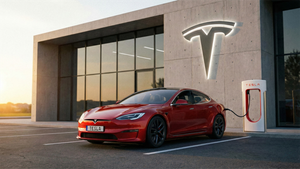
Outside of the mega-caps, Palantir Technologies (NASDAQ: PLTR) emerged as one of the S&P 500’s top performers, with its stock price soaring 158% as its enterprise AI platform became the standard for both government and corporate logistics. On the flip side, traditional retail and some automotive manufacturers struggled to adapt to the "reciprocal tariff" environment, facing higher input costs and supply chain disruptions that ate into margins, though Tesla (NASDAQ: TSLA) managed a late-year rally of 17% on the back of renewed optimism regarding its autonomous driving software and SpaceX synergies.
A New Economic Paradigm: AI, Trade, and Policy
The events of 2025 have signaled a broader shift in the global economic order. The "AI Cold War"—characterized by export bans on advanced semiconductors to China—has forced a decoupling of tech supply chains. While this initially caused friction, it has led to a massive domestic investment boom in the U.S., as evidenced by the technology sector's 34% gain. This trend suggests that the market is now valuing domestic manufacturing capacity and technological sovereignty more than the efficiency of globalized supply chains.
Furthermore, the "April Tariff Storm" has set a new precedent for how markets react to protectionist policies. While the initial reaction was one of panic, the subsequent recovery suggests that investors are becoming more adept at pricing in "policy volatility." The 43-day government shutdown also highlighted a growing disconnect between political gridlock and private sector performance, as corporate earnings remained remarkably resilient despite the lack of federal data and oversight during the autumn months.
Historically, 2025 will likely be compared to the post-pandemic recovery of 2021, but with a crucial difference: the growth in 2025 was driven by productivity gains from AI rather than pure fiscal stimulus. The integration of generative AI into enterprise workflows has begun to show up in the "hard data," contributing to the higher-than-expected GDP growth and allowing companies to maintain high margins even as labor costs rose.
The 2026 Outlook: A "Wait and See" Era Begins
As we look toward 2026, the market enters a "wait and see" phase. Federal Reserve Chair Powell signaled at the December FOMC meeting that while the easing cycle has been successful, the central bank may pause further cuts to evaluate the long-term impact on inflation. With the federal funds rate at its lowest level since 2022, the "easy money" phase of the recovery may be nearing its conclusion, shifting the burden of performance back onto corporate fundamentals.
Short-term challenges include the potential for a "valuation hangover" in the tech sector, where P/E ratios have reached historical highs. Strategic pivots will be required for companies that have yet to fully integrate AI into their core business models, as the "hype" phase of 2023-2024 has transitioned into a "show me the money" phase in 2025. Investors should also keep a close eye on the materials sector; if gold and silver prices stabilize or retreat, it could signal a return of confidence in traditional fiat-based assets.
Market opportunities are expected to emerge in mid-cap stocks that were overlooked during the 2025 mega-cap rally. As interest rates settle, the "broadening out" of the market that analysts have predicted for years may finally take hold in 2026, offering value to those who can identify the next generation of AI-enabled winners outside of the trillion-dollar club.
Closing the Ledger on a Historic Year
In summary, 2025 was a year where the "New Economy" of AI and domestic resilience triumphed over the "Old Risks" of trade wars and political instability. The S&P 500, Dow, and Nasdaq have all emerged stronger, backed by a Fed that successfully navigated a soft landing and a corporate sector that continues to innovate at a breakneck pace. The key takeaway for investors is that the market's structural tailwinds—specifically AI and a robust U.S. consumer—currently outweigh the episodic headwinds of policy shifts.
Moving forward, the market is likely to transition from a macro-driven environment to a stock-picker's market. With the Fed's pivot largely priced in, the focus will return to individual company execution and the ability to maintain growth in a maturing economic cycle. Investors should remain vigilant, watching for signs of cooling in the tech sector and monitoring the ongoing geopolitical developments that could trigger another "tariff-style" shock.
As we head into the new year, the resilience shown in 2025 serves as a powerful reminder of the U.S. market's ability to absorb shocks and find new paths to growth. The "Santa Claus Rally" of late December provides a hopeful backdrop for 2026, but the lessons of the "April Storm" should not be forgotten: in the modern market, volatility is the price of admission for historic returns.
This content is intended for informational purposes only and is not financial advice