California pear farmers are fighting for survival as a surge of low-priced pear imports from Argentina continues to flood the U.S. market each year just as the domestic harvest begins. Industry leaders are now in discussions with staff at the Office of the U.S. Trade Representative (USTR) to find meaningful relief from a situation they say has become a major driver of the decline of California’s historic pear industry, which dates back to the Gold Rush.
This press release features multimedia. View the full release here: https://www.businesswire.com/news/home/20251205786465/en/
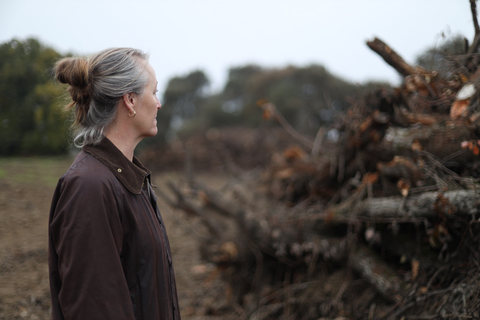
Virginia Hemly Chhabra's family farm has pulled 500 acres of pear trees, some over 100 years old.
“Since 2016, Argentine exports of fresh pears to the U.S. have increased by 125 percent in direct competition with California Bartlett and Bosc pears, particularly in the early season,” said Chris Zanobini, Executive Director of the California Pear Advisory Board. “Argentina has been flooding the U.S. market just before the start of California’s harvest in early July.”
Although Argentina supplies more than 90 percent of pears imported into the U.S. during winter months, Zanobini notes that roughly 70 percent of Argentine pear imports now arrive in April and May—after long storage periods and right as California growers prepare to ship their first fresh fruit.
“This flood of cheap imports has a devastating impact on California growers,” he said. “Retailers feature these low-priced imports instead of newly harvested U.S. pears. Additionally, retail data indicates these imported pears are not being sold to shoppers at a discount. It’s bad for farmers and it’s bad for consumers.”
James Christie, president of Bryant Christie Inc. (BCI), which represents several U.S. agricultural groups including the California pear industry, says the need for action is urgent.
“The stakes are high and this will be a challenge, but we are doing everything we can to fight for California farmers,” Christie said. “The USTR has indicated they are looking for ways to help U.S. farmers manage import pressures. That is exactly what we are asking for.”
Christie emphasized that tariffs alone are unlikely to solve the problem.
“We are requesting relief in the form of a quota on Argentine pears or a defined period during which these imports cannot enter the U.S.,” he said.
According to Zanobini, Argentine pears are counter-seasonal to U.S. production, meaning the fruit arriving in spring has often been stored for half a year. Many Argentine shippers also use 1-MCP, an anti-ripening agent that extends storage life but can prevent pears from ripening properly, resulting in a poor eating experience for consumers.
“California pear shippers have pledged never to use this chemical,” Zanobini noted. “But when our fresh, newly harvested pears arrive, they are forced to compete with old, stored fruit that often won’t ripen.”
The impact is tangible. Zanobini described a major lost opportunity this past July:
“A national grocery chain had planned a large promotion featuring our early California fruit, including a price premium,” he said. “But the retailer canceled, citing a market flooded with Argentine pears. Our shippers lost both the sales and the premium.”
Small Family Farms at Risk
“This is just one example of how Argentine imports are harming U.S. farmers,” Christie said. “California pear growers are struggling. Acreage is shrinking. The number of pear growers continues to decline.”
Zanobini added that the industry is composed of small, multi-generational family farms known for producing nutritious fruit using some of the most environmentally responsible practices in the world.
“These are exactly the types of farmers U.S. trade policy should protect,” he said.
He also pointed out that pears are not alone. “California pear growers are just one of many U.S. farmers suffering from recent trade negotiations—from soybean farmers to cattle ranchers to citrus growers,” Zanobini said. “While the Trump Administration provides the Argentinian government with a $40 billion bailout, we believe there is room to negotiate a fair deal that prevents Argentine imports from undercutting U.S. farmers in their own market.”
Christie underscored the urgency of the issue. “California’s pear industry may be small within U.S. agriculture, but that does not make it unimportant,” he said. “If anything, the fact that these are small family farmers should make defending them a priority.”
View source version on businesswire.com: https://www.businesswire.com/news/home/20251205786465/en/
“This flood of cheap imports has a devastating impact on California growers." James Christie, Bryant Christie Inc.
Contacts
Chris Zanobini
chris@agamsi.com
(916) 441-0432