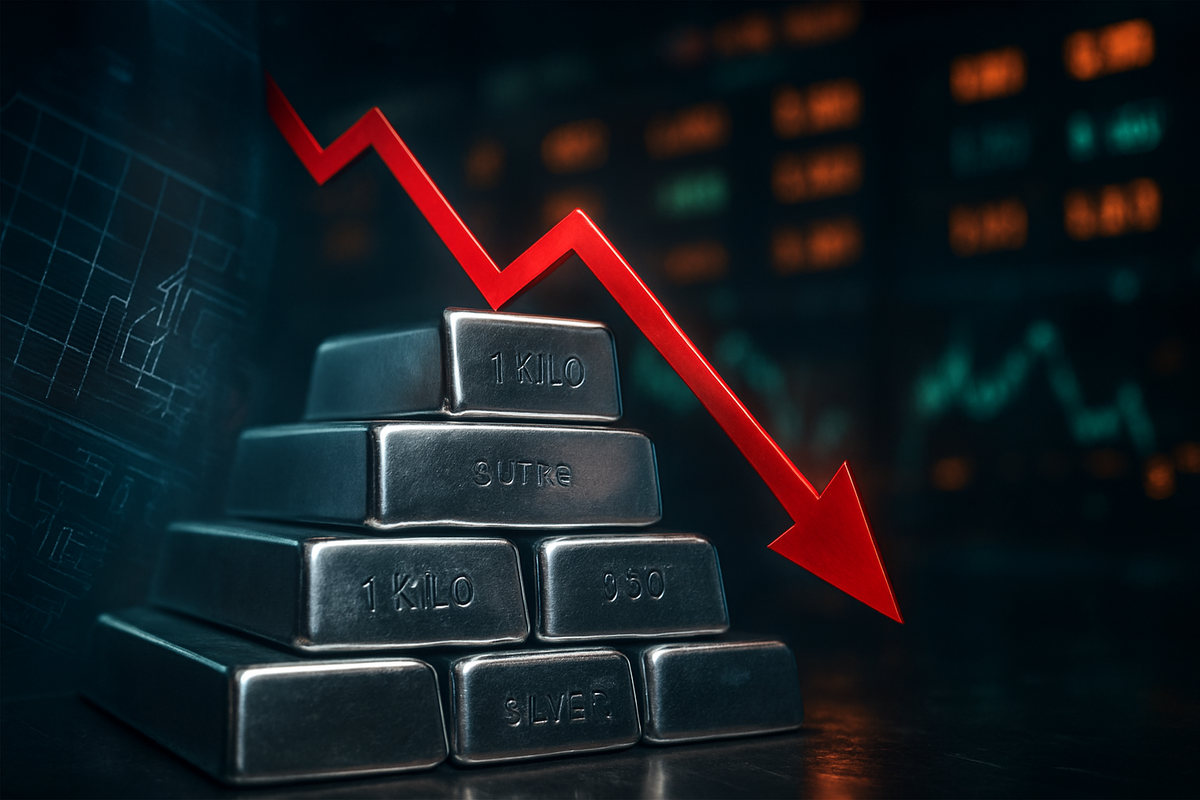
The silver market experienced a violent "flash crash" on February 12, 2026, with prices plummeting 9.71% to close at $75.78 per ounce. This sudden downturn followed a period of intense speculative fervor that had pushed the metal to multi-year highs earlier in the quarter. The move triggered a cascade of automated sell orders and margin calls, erasing billions in paper wealth in a matter of hours and leaving market participants scrambling to assess whether the long-term bull thesis for the "white metal" remains intact.
While the drop was sharp, it occurred against a backdrop of historic structural scarcity. As of February 13, 2026, the silver market is grappling with its sixth consecutive year of supply deficits, a phenomenon driven by insatiable industrial demand for green energy technologies. Yesterday’s price action highlights the ongoing tension between silver’s role as a volatile monetary asset, prone to "mechanical" selling by leveraged traders, and its fundamental status as an indispensable industrial commodity that is increasingly difficult to source.
The Anatomy of the February 12 Plunge
The sell-off began during the early London trading session on February 12 and accelerated rapidly as New York markets opened. The primary catalyst appeared to be a "leverage flush"—a scenario where over-extended traders are forced to liquidate positions as prices dip below key technical levels. This was exacerbated by the CME Group raising maintenance margins for silver futures from 15% to 18%, a move designed to curb volatility that ironically fueled a panicked exit from the "paper" silver market. At the peak of the frenzy, the ratio of paper contracts to physical bullion held in vaults reached a staggering 500:1, leaving the market highly vulnerable to a sudden correction.
Leading up to this event, silver had enjoyed a parabolic rally, briefly touching $120 per ounce in late January 2026. This ascent was fueled by a combination of geopolitical tensions and a burgeoning "war trade" premium. However, a stronger-than-expected U.S. jobs report released earlier in the week—showing 130,000 jobs added against a 70,000 forecast—strengthened the U.S. dollar and signaled a more hawkish stance from the Federal Reserve. As interest rate cut expectations were pushed further into late 2026, the opportunity cost of holding non-yielding precious metals rose, prompting large-scale institutional profit-taking that quickly spiraled into a broader liquidation.
Winners, Losers, and the Impact on Key Tickers
The volatility has sent shockwaves through the equity markets, particularly for those with direct exposure to silver prices. The iShares Silver Trust (NYSE Arca: SLV), the world’s largest silver-backed ETF, saw massive outflows on February 12, dropping nearly 11.5% as institutional traders liquidated their positions to cover margin calls in other sectors, including a cooling cryptocurrency market. For the SLV, the challenge moving forward will be maintaining physical parity if the "paper" price continues to disconnect from the tightening physical supply.
Mining companies, which often act as a leveraged play on the metal’s price, were hit even harder. First Majestic Silver Corp (NYSE: AG), known for having the highest silver-to-gold revenue ratio among major producers, saw its shares tumble 9.4% to close at $21.59. This comes at a sensitive time for the company, which recently completed the acquisition of Gatos Silver to bolster its production profile. While the price drop hurts immediate margins, companies like First Majestic may paradoxically benefit in the long term if the lower prices discourage new competing projects, further tightening the global supply-demand gap. Conversely, industrial end-users in the solar and electronics sectors may find temporary relief in the price dip, though most have already moved toward long-term fixed-price contracts to mitigate such volatility.
The Paradox: Industrial Necessity vs. Monetary Asset
The current crisis underscores the "dual identity" of silver. On one hand, it is a critical industrial metal; on the other, it remains a monetary hedge. By 2026, industrial fabrication has grown to account for nearly 60% of total silver demand. The solar photovoltaic (PV) sector alone consumes approximately 196 million ounces annually, driven by the global transition to high-efficiency TOPCon technology. Additionally, the electric vehicle (EV) revolution has significantly increased silver usage, with modern EVs requiring up to 50 grams of silver for power electronics and battery management systems—double the amount used in traditional internal combustion engines.
Despite these rock-solid fundamentals, silver continues to suffer from "mechanical" selling. When hedge funds face losses in equity or bond markets, they often sell their most liquid and profitable positions—frequently gold and silver—to raise cash. This creates a disconnect where the price of silver drops even as physical warehouses are emptied. The current six-year deficit, which has seen more than 800 million ounces drained from global stocks since 2021, suggests that the "paper" price of $75.78 may not accurately reflect the extreme difficulty of obtaining physical bars for industrial use.
Looking Ahead: Rebound or Further Retraction?
The short-term outlook for silver remains clouded by technical damage. Market analysts suggest that silver needs to reclaim the $80 level quickly to prevent a deeper slide toward the $65 support zone. In the coming weeks, investors will be watching for "thrifting" signals from the solar industry—where manufacturers attempt to reduce the amount of silver used in panels—to see if high prices are finally beginning to destroy demand. However, historical precedents suggest that thrifting has limits, and the essential nature of silver in AI chips and data center cooling (a new demand pillar in 2026) may provide a floor for the market.
Long-term, the structural bull case remains the most compelling in decades. Global mine supply is notoriously inelastic; because 70% of silver is produced as a by-product of lead, zinc, and copper mining, higher silver prices do not automatically lead to more mines. Unless base metal prices also surge, silver production is likely to remain stagnant. This suggests that once the current "leverage flush" is complete, the physical shortage will once again become the dominant driver of price discovery, potentially leading to a sharp V-shaped recovery.
Navigating the Volatility
Yesterday's 9.71% plunge is a stark reminder that silver remains one of the most volatile assets in the financial world. For investors, the takeaway from the February 12 event is twofold: the "paper" market can diverge wildly from physical reality in the short term, but the long-term trend is dictated by a supply deficit that shows no signs of abating. The "mechanical" selling witnessed this week has cleared out much of the speculative froth, potentially setting the stage for a more sustainable climb.
In the months ahead, the market will closely monitor ETF flows in SLV and the quarterly earnings of miners like First Majestic Silver (AG) to gauge the health of the sector. As industrial demand for EVs, solar, and AI continues to grow, the battle between paper leverage and physical scarcity will remain the defining narrative of the silver market. For now, $75.78 stands as a critical battlefield for bulls and bears alike.
This content is intended for informational purposes only and is not financial advice.