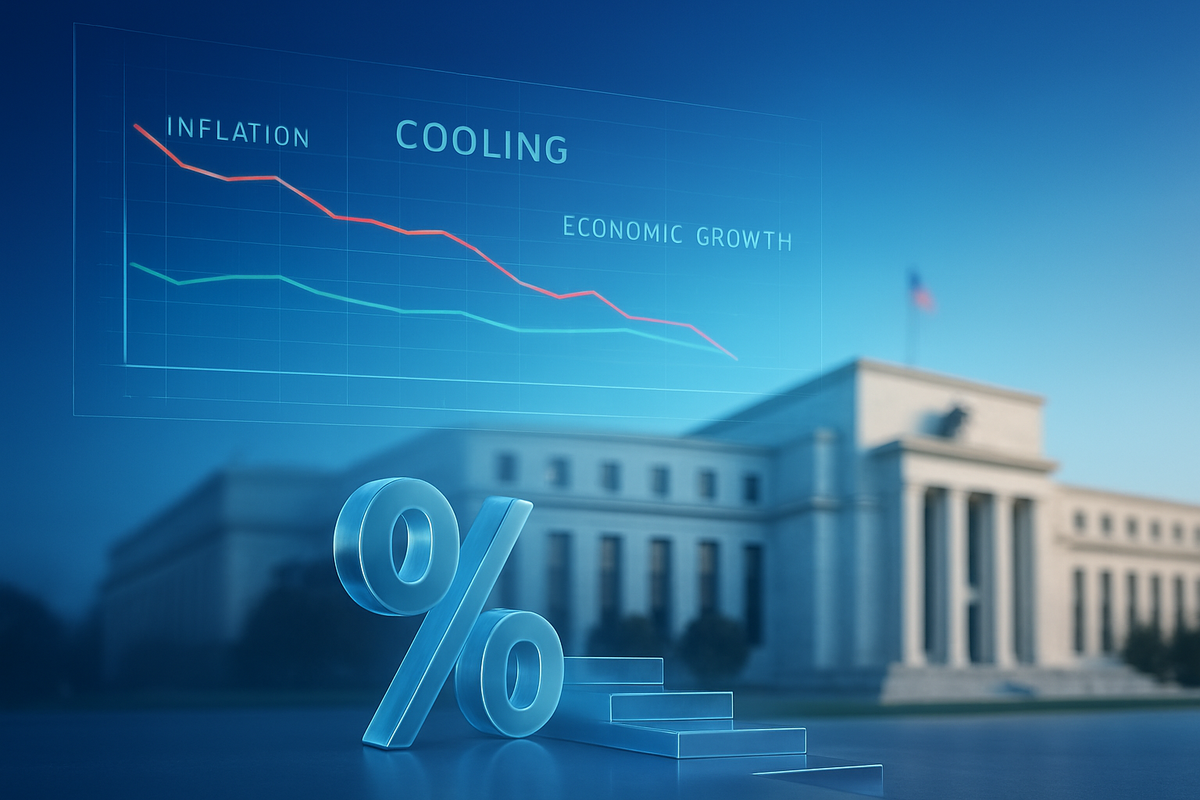
The U.S. financial landscape shifted decisively on February 13, 2026, as the Bureau of Labor Statistics released a Consumer Price Index (CPI) report that showed inflation cooling more rapidly than market analysts had anticipated. The headline January CPI rose at an annual rate of 2.4%, a notable deceleration from the 2.7% recorded in December 2025 and below the consensus forecast of 2.5%. This "tame" reading has provided the Federal Reserve with the "greater confidence" it has sought to begin easing its restrictive monetary policy, which has held the federal funds rate at 3.50%–3.75% since late last year.
The immediate market implication of this data was a dramatic recalibration of interest rate expectations. According to the CME FedWatch Tool, the probability of a first interest rate cut in June 2026 surged to approximately 83%, up from less than 50% just two days prior. This reversal followed a brief period of hawkish sentiment triggered by a robust January jobs report on February 11, which had initially stoked fears that a resilient labor market would keep inflation "sticky." However, the cooling CPI figures have effectively neutralized those concerns, setting the stage for a potential "soft landing" and a transition to a lower-rate environment by mid-year.
Data Breakdown: The Path to Disinflation
The January 2026 CPI report highlighted a broad-based cooling of price pressures across the economy. On a month-over-month basis, headline inflation grew by just 0.2%, down from 0.3% in December. Core CPI, which excludes the volatile food and energy sectors, also showed progress, declining to a 2.5% year-over-year rate from 2.6% the previous month. The primary drivers of this disinflationary trend were energy prices—specifically gasoline, which fell 1.5% in January—as well as significant price drops in commodities such as beef and eggs. These declines were enough to offset a modest 0.2% monthly increase in shelter costs, which continue to be the most stubborn component of the index.
This cooling trend stands in stark contrast to the start of 2025, when a "hot" January CPI report of 3.0% forced the Fed to maintain high rates for longer than many had hoped. The timeline of events leading up to this morning’s release was fraught with volatility. After the Fed held rates steady on January 28, 2026, the February 11 jobs report—which showed 130,000 new jobs and a low 4.3% unemployment rate—led many investors to believe the Fed would stay "higher for longer." The subsequent CPI release acted as a powerful counter-narrative, proving that the economy can add jobs without reigniting the inflationary fires of 2022–2024.
The timing is particularly critical as the Federal Reserve prepares for a leadership transition. Current Chair Jerome Powell is expected to hand the reins to Kevin Warsh in May 2026. If the June cut occurs as now widely expected, it would mark the first major policy action of the Warsh era. Stakeholders across Wall Street, from retail traders to institutional giants like The Goldman Sachs Group Inc. (NYSE: GS), are now adjusting their models for a terminal rate between 3.00% and 3.25% by the end of 2026.
Winners and Losers: A Shift Toward Growth and Refinancing
The prospect of a June rate cut has significant implications for public companies, particularly those in the technology and real estate sectors. High-growth tech firms like Apple Inc. (NASDAQ: AAPL), Microsoft Corp. (NASDAQ: MSFT), and NVIDIA Corp. (NASDAQ: NVDA) are among the primary beneficiaries. Lower interest rates reduce the discount rate used to value future earnings, typically leading to a "multiple expansion" where investors are willing to pay more for every dollar of projected profit. Furthermore, lower rates ease credit conditions for consumers, potentially boosting demand for high-end hardware and software services.
The real estate sector also stands to gain immensely from a 3.0% to 3.5% rate environment. Real Estate Investment Trusts (REITs) like Prologis, Inc. (NYSE: PLD) have been navigating a challenging environment where nearly $936 billion in commercial real estate debt is set to mature in 2026. A rate cut in June would provide much-needed refinancing relief and increase the attractiveness of REIT dividends compared to Treasury yields. Analysts suggest that companies like Prologis, which manage vast industrial warehouse networks, could see their property values rise as capitalization rates adjust to the lower-rate outlook.
Conversely, the banking sector faces a more complex outlook. For a "mega-bank" like JPMorgan Chase & Co. (NYSE: JPM), a lower federal funds rate often leads to "net interest margin" (NIM) compression, as the spread between loan interest and deposit payouts narrows. JPMorgan has already issued guidance acknowledging potential deposit margin pressure if rates fall toward 3%. However, the bank expects to offset this through increased loan volume and a resurgence in M&A advisory fees, as lower borrowing costs entice corporations to resume deal-making and capital investment that was sidelined during the rate-hiking cycle.
Broader Significance: The "Soft Landing" Solidified
The January 2026 inflation data is being hailed as the final piece of the puzzle for a successful "soft landing"—a rare economic feat where inflation returns to target without triggering a recession. This event fits into a broader industry trend of "normalization" after years of pandemic-induced volatility. The Federal Reserve's ability to navigate the transition from Powell to Warsh amidst cooling inflation suggests a level of institutional stability that markets find reassuring.
The regulatory and policy implications are also profound. If the Fed successfully begins its cutting cycle in June, it will likely be viewed as a validation of their cautious approach in late 2025. Historically, the Fed has often been criticized for moving too late; however, by waiting for a clear cooling in both core and headline CPI, they have avoided the "stop-and-start" policy errors of the 1970s. The ripple effect on global markets cannot be understated, as a lower U.S. dollar—often a byproduct of falling rates—could provide relief to emerging market economies burdened by dollar-denominated debt.
Furthermore, the focus on "quality" and "resilience" in the 2026 corporate sector suggests that while the Fed is cutting, the economy is not "broken." Unlike the emergency cuts of 2008 or 2020, the projected 2026 cuts are perceived as "maintenance" moves to return rates to a neutral setting. This distinction is vital for long-term investors who are looking for sustainable growth rather than a quick stimulus-driven pump.
What Comes Next: The Road to the June Meeting
In the short term, investors should expect a period of relative "stasis" in Fed policy. A rate pause is almost certain for the March meeting, as the FOMC will likely want to see one more month of data (the February CPI) to ensure the January cooling wasn't an anomaly. The strategic pivot for many corporations will involve locking in debt at current levels before rates fall further, or conversely, delaying major capital expenditures until the June cut officially lowers the cost of capital.
Market participants will also be closely watching the confirmation hearings for Kevin Warsh. Any signals regarding his views on the "neutral" rate or quantitative tightening will be scrutinized for clues on whether the Fed might accelerate cuts later in the year. Potential challenges include a sudden spike in energy prices due to geopolitical tensions or a reversal in the cooling of shelter costs, both of which could derail the 83% odds for a June move.
In the long run, the shift toward a 3.0% terminal rate represents a "new normal." This environment is likely to favor "growth-at-a-reasonable-price" (GARP) strategies and dividend-paying stocks that can compete with falling fixed-income yields. Scenarios where inflation dips below 2% or where the labor market suddenly weakens could lead to even deeper cuts, though current data does not yet support such a "hard landing" outlook.
Conclusion: A Pivot Point for Investors
The January 2026 CPI report has effectively changed the narrative from "when will inflation end?" to "when will the easing begin?" With headline inflation at 2.4% and the labor market showing remarkable resilience, the Federal Reserve has a clear runway to initiate its first rate cut in June. The transition from 3.5% to a projected 3.0% by year-end signals a shift from a defensive posture to one of cautious optimism for the broader market.
Investors should move forward with the understanding that while the "higher-for-longer" era is coming to a close, the benefits will not be distributed equally. The winners will likely be found in sectors that thrive on lower discount rates and refinancing relief, such as Tech and Real Estate, while Banks will need to rely on volume to sustain their earnings power. In the coming months, the focus will remain squarely on the Fed’s messaging and the smooth transition of leadership.
As we look toward the June meeting, the primary takeaway for the market is clear: the disinflationary trend is back on track. For the public, this means lower borrowing costs are on the horizon, and for the markets, it means the "Goldilocks" scenario of low inflation and steady growth is closer than ever to being realized.
This content is intended for informational purposes only and is not financial advice.