In a landmark legal outcome that underscores the intensifying global struggle for artificial intelligence dominance, a federal jury in San Francisco has convicted former Google software engineer Linwei Ding on 14 felony counts related to the theft of proprietary trade secrets. The verdict, delivered on January 29, 2026, marks the first time in U.S. history that an individual has been convicted of economic espionage specifically targeting AI-accelerator hardware and the complex software orchestration required to power modern large language models (LLMs).
The conviction of Ding—who also operated under the name Leon Ding—serves as a stark reminder of the high stakes involved in the "chip wars." As the world’s most powerful tech entities race to build infrastructure capable of training the next generation of generative AI, the value of the underlying hardware has skyrocketed. By exfiltrating over 2,000 pages of confidential specifications regarding Google’s proprietary Tensor Processing Units (TPUs), Ding allegedly sought to provide Chinese tech startups with a "shortcut" to matching the computing prowess of Alphabet Inc. (NASDAQ: GOOGL).
Technical Sophistication and the Architecture of Theft
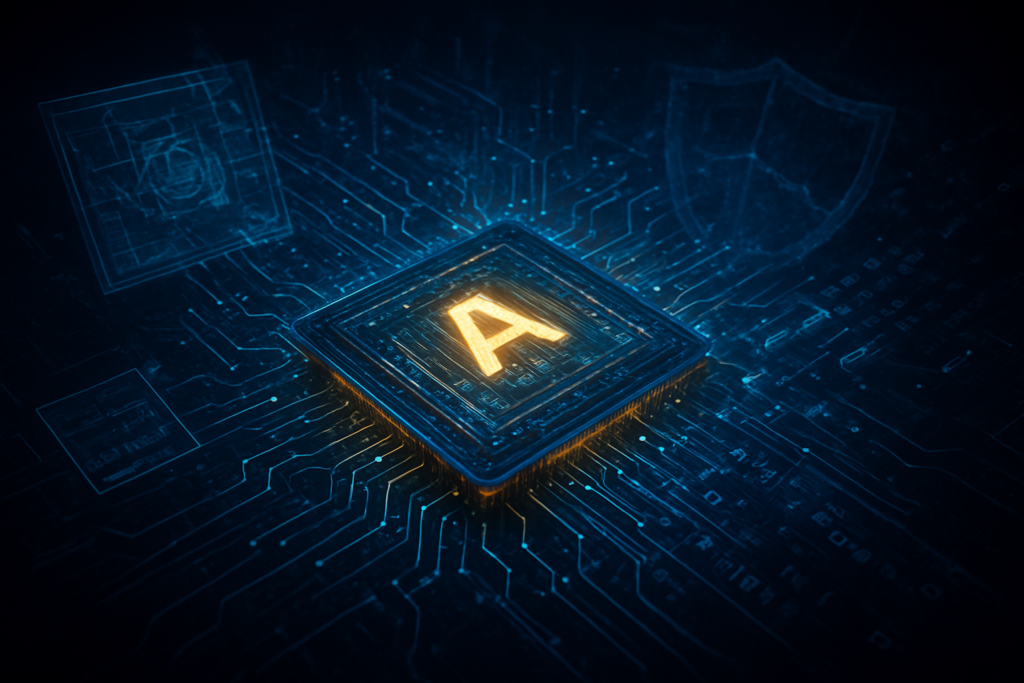
The materials stolen by Ding were not merely conceptual diagrams; they represented the foundational "blueprints" for the world’s most advanced AI infrastructure. According to trial testimony, the theft included detailed specifications for Google’s TPU v4 and the then-unreleased TPU v6. Unlike general-purpose GPUs produced by companies like NVIDIA (NASDAQ: NVDA), Google’s TPUs are custom-designed Application-Specific Integrated Circuits (ASICs) optimized specifically for the matrix math that drives neural networks. The stolen data detailed the internal instruction sets, chip interconnects, and the thermal management systems that allow these chips to run at peak efficiency without melting down.
Beyond the hardware itself, Ding exfiltrated secrets regarding Google’s Cluster Management System (CMS). In the world of elite AI development, the "engineering bottleneck" is often not the individual chip, but the orchestration—the ability to wire tens of thousands of chips into a singular, cohesive supercomputer. Ding’s cache included the software secrets for "vMware-like" virtualization layers and low-latency networking protocols, including blueprints for SmartNICs (network interface cards). These components are critical for reducing "tail latency," the micro-delays that can cripple the training of a model as massive as Gemini or GPT-5.
This theft differed from previous corporate espionage cases due to the specific "system-level" nature of the data. While earlier industrial spies might have targeted a single patent or a specific chemical formula, Ding took the entire "operating manual" for an AI data center. The AI research community has reacted with a mixture of alarm and confirmation; experts note that while many companies can design a chip, very few possess the decade of institutional knowledge Google has in making those chips talk to each other across a massive cluster.
Reshaping the Competitive Landscape of Silicon Valley
The conviction has immediate and profound implications for the competitive positioning of major tech players. For Alphabet Inc., the verdict is a defensive victory, validating their rigorous internal security protocols—which ultimately flagged Ding’s suspicious upload activity—and protecting the "moat" that their custom silicon provides. By maintaining exclusive control over TPU technology, Google retains a significant cost and performance advantage over competitors who must rely on third-party hardware.
Conversely, the case highlights the desperation of Chinese AI firms to bypass Western export controls. The trial revealed that while Ding was employed at Google, he was secretly moonlighting as the CTO for Beijing Rongshu Lianzhi Technology and had founded his own startup, Shanghai Zhisuan Technology. For these firms, acquiring Google’s TPU secrets was a strategic necessity to circumvent the performance caps imposed by U.S. sanctions on advanced chips. The conviction disrupts these attempts to "climb the ladder" of AI capability through illicit means, likely forcing Chinese firms to rely on less efficient, domestically produced hardware.
Other tech giants, including Meta Platforms Inc. (NASDAQ: META) and Amazon.com Inc. (NASDAQ: AMZN), are likely to tighten their own internal controls in the wake of this case. The revelation that Ding used Apple Inc. (NASDAQ: AAPL) Notes to "launder" data—copying text into notes and then exporting them as PDFs to personal accounts—has exposed a common vulnerability in enterprise security. We are likely to see a shift toward even more restrictive "air-gapped" development environments for engineers working on next-generation silicon.
National Security and the Global AI Moat
The Ding case is being viewed by Washington as a marquee success for the Disruptive Technology Strike Force, a joint initiative between the Department of Justice and the Commerce Department. The conviction reinforces the narrative that AI hardware is not just a commercial asset, but a critical component of national security. U.S. officials argued during the trial that the loss of this intellectual property would have effectively handed a decade of taxpayer-subsidized American innovation to foreign adversaries, potentially tilting the balance of power in both economic and military AI applications.
This event fits into a broader trend of "technological decoupling" between the U.S. and China. Just as the 20th century was defined by the race for nuclear secrets, the 21st century is being defined by the race for "compute." The conviction of a single engineer for stealing chip secrets is being compared by some historians to the Rosenberg trial of the 1950s—a moment that signaled to the world just how valuable and dangerous a specific type of information had become.
However, the case also raises concerns about the "chilling effect" on the global talent pool. AI development has historically been a collaborative, international endeavor. Critics and civil liberty advocates worry that increased scrutiny of engineers with international ties could lead to a "brain drain," where talented individuals avoid working for U.S. tech giants due to fear of being caught in the crosshairs of geopolitical tensions. Striking a balance between protecting trade secrets and fostering an open research environment remains a significant challenge for the industry.
The Future of AI IP Protection
In the near term, we can expect a dramatic escalation in "insider threat" detection technologies. AI companies are already beginning to deploy their own LLMs to monitor employee behavior, looking for subtle patterns of data exfiltration that traditional software might miss. The "data laundering" technique used by Ding will likely lead to more aggressive monitoring of copy-paste actions and cross-application data transfers within corporate networks.
In the long term, the industry may move toward "hardware-based" security for intellectual property. This could include chips that "self-destruct" or disable their most advanced features if they are not connected to a verified, authorized network. There is also ongoing discussion about a "multilateral IP treaty" specifically for AI, though given the current state of international relations, such an agreement seems distant.
Experts predict that we will see more cases like Ding's as the "scaling laws" of AI continue to hold true. As long as more compute leads to more powerful AI, the incentive to steal the architecture of that compute will only grow. The next frontier of espionage will likely move from hardware specifications to the "weights" and "biases" of the models themselves—the digital essence of the AI's intelligence.
A New Era of Accountability
The conviction of Linwei Ding is a watershed moment in the history of artificial intelligence. It signals that the era of "move fast and break things" has evolved into an era of high-stakes corporate and national accountability. Key takeaways from this case include the realization that software orchestration is as valuable as hardware design and that the U.S. government is willing to use the full weight of economic espionage laws to protect its technological lead.
This development will be remembered as the point where AI intellectual property moved from the realm of civil litigation into the domain of federal criminal law and national security. It underscores the reality that in 2026, a few thousand pages of chip specifications are among the most valuable—and dangerous—documents on the planet.
In the coming months, all eyes will be on Ding’s sentencing hearing, scheduled for later this spring. The severity of his punishment will send a definitive signal to the industry: the price of AI espionage has just gone up. Meanwhile, tech companies will continue to harden their defenses, knowing that the next attempt to steal the "crown jewels" of the AI revolution is likely already underway.
This content is intended for informational purposes only and represents analysis of current AI developments.
TokenRing AI delivers enterprise-grade solutions for multi-agent AI workflow orchestration, AI-powered development tools, and seamless remote collaboration platforms.
For more information, visit https://www.tokenring.ai/.