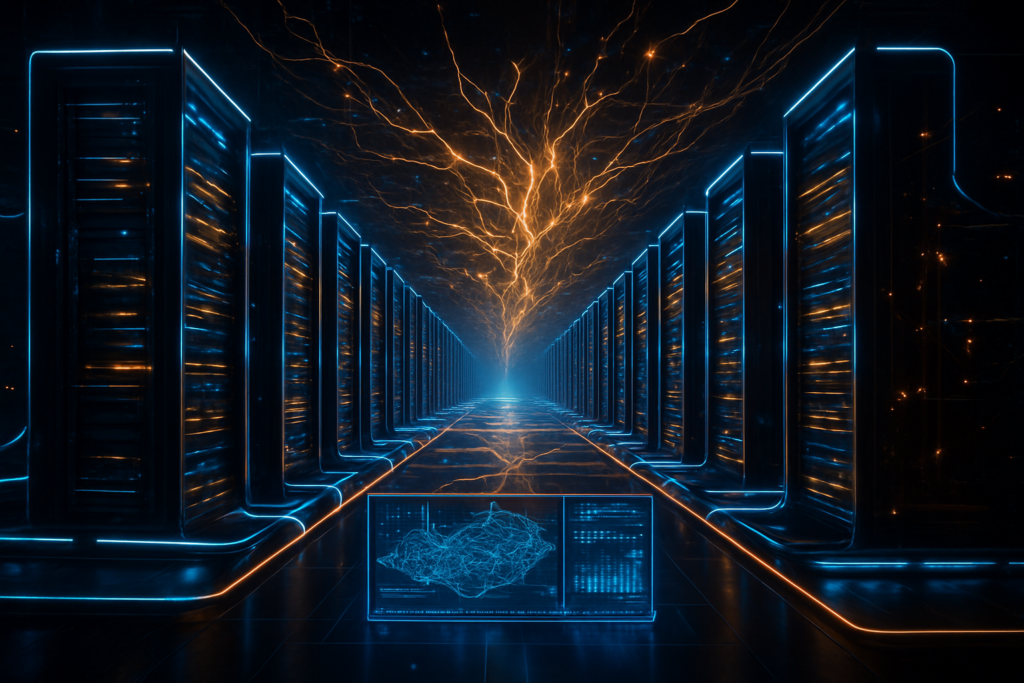
The landscape of artificial intelligence reached a historic inflection point at CES 2026, as the industry transitioned from the era of discrete GPUs to the era of unified, rack-scale "AI factories." The highlight of the event was the unveiling of the AMD (NASDAQ: AMD) Helios platform, a liquid-cooled, double-wide rack-scale architecture designed to push the boundaries of "yotta-scale" computing. This announcement sets the stage for a direct confrontation with NVIDIA (NASDAQ: NVDA) and its newly minted Vera Rubin platform, marking the most aggressive challenge to NVIDIA’s data center dominance in over a decade.
The immediate significance of the Helios launch lies in its focus on "Agentic AI"—autonomous systems capable of long-running reasoning and multi-step task execution. By prioritizing massive High-Bandwidth Memory (HBM4) co-packaging and open-standard networking, AMD is positioning Helios not just as a hardware alternative, but as a fundamental shift toward an open ecosystem for the next generation of trillion-parameter models. As hyperscalers like OpenAI and Meta seek to diversify their infrastructure, the arrival of Helios signals the end of the single-vendor era and the birth of a true silicon duopoly in the high-end AI market.
Technical Superiority and the Memory Wall
The AMD Helios platform is a technical marvel that redefines the concept of a data center node. Each Helios rack is a liquid-cooled powerhouse containing 18 compute trays, with each tray housing four Instinct MI455X GPUs and one EPYC "Venice" CPU. This configuration yields a staggering 72 GPUs and 18 CPUs per rack, capable of delivering 2.9 ExaFLOPS of FP4 AI compute. The most striking specification is the integration of 31TB of HBM4 memory across the rack, with an aggregate bandwidth of 1.4PB/s. This "memory-first" approach is specifically designed to overcome the "memory wall" that has traditionally bottlenecked large-scale inference.
In contrast, NVIDIA’s Vera Rubin platform focuses on "extreme co-design." The Rubin GPU features 288GB of HBM4 and is paired with the Vera CPU—an 88-core Armv9.2 chip featuring custom "Olympus" cores. While NVIDIA’s NVL72 rack delivers a slightly higher 3.6 ExaFLOPS of NVFP4 compute, its true innovation is the Inference Context Memory Storage (ICMS). Powered by the BlueField-4 DPU, ICMS acts as a shared, pod-level memory tier for Key-Value (KV) caches. This allows a fleet of AI agents to share a unified "context namespace," meaning that if one agent learns a piece of information, the entire pod can access it without redundant computation.
The technical divergence between the two giants is clear: AMD is betting on raw, on-package memory density (432GB per GPU) to keep trillion-parameter models resident in high-speed memory, while NVIDIA is leveraging its vertical stack to create a sophisticated, software-defined memory hierarchy. Industry experts note that AMD’s reliance on the new Ultra Accelerator Link (UALink) for scale-up and Ultra Ethernet for scale-out networking represents a major victory for open standards, potentially lowering the barrier to entry for third-party hardware integration.
Initial reactions from the AI research community have been overwhelmingly positive, particularly regarding the performance-per-watt gains. Both platforms utilize advanced 3D chiplet co-packaging and hybrid bonding, which significantly reduces the energy required to move data between logic and memory. This efficiency is crucial as the industry moves toward "yotta-scale" goals—computing at the scale of 10²⁴ operations per second—where power consumption becomes the primary limiting factor for data center expansion.
Market Disruptions and the Silicon Duopoly
The arrival of Helios and Rubin has profound implications for the competitive dynamics of the tech industry. For AMD (NASDAQ: AMD), Helios represents a "Milan moment"—a breakthrough that could see its data center market share jump from the low teens to nearly 20% by the end of 2026. The platform has already secured a massive endorsement from OpenAI, which announced a partnership for 6 gigawatts of AMD infrastructure. Perhaps more significantly, reports suggest AMD has issued warrants that could allow OpenAI to acquire up to a 10% stake in the company, a move that would cement a deep, structural alliance against NVIDIA’s dominance.
NVIDIA (NASDAQ: NVDA), meanwhile, remains the incumbent titan, controlling approximately 80-85% of the AI accelerator market. Its transition to a one-year product cadence—moving from Blackwell to Rubin in record time—is a strategic maneuver designed to exhaust competitors. However, the "NVIDIA tax"—the high premium for its proprietary CUDA and NVLink stack—is driving hyperscalers like Alphabet (NASDAQ: GOOGL) and Microsoft (NASDAQ: MSFT) to aggressively fund "second source" options. By offering an open-standard alternative that matches or exceeds NVIDIA’s memory capacity, AMD is providing these giants with the leverage they have long sought.
Startups and mid-tier AI labs stand to benefit from this competition through a projected 10x reduction in token generation costs. As AMD and NVIDIA battle for the "price-per-token" crown, the economic viability of complex, agentic AI workflows will improve. This could lead to a surge in new AI-native products that were previously too expensive to run at scale. Furthermore, the shift toward liquid-cooled, rack-scale systems will favor data center providers like Equinix (NASDAQ: EQIX) and Digital Realty (NYSE: DLR), who are already retrofitting facilities to handle the massive power and cooling requirements of these new "AI factories."
The strategic advantage of the Helios platform also lies in its interoperability. By adhering to the Open Compute Project (OCP) standards, AMD is appealing to companies like Meta (NASDAQ: META), which has co-designed the Helios Open Rack Wide specification. This allows Meta to mix and match AMD hardware with its own in-house MTIA (Meta Training and Inference Accelerator) chips, creating a flexible, heterogeneous compute environment that reduces reliance on any single vendor's proprietary roadmap.
The Dawn of Agentic AI and Yotta-Scale Infrastructure
The competition between Helios and Rubin is more than a corporate rivalry; it is a reflection of the broader shift in the AI landscape toward "Agentic AI." Unlike the chatbots of 2023 and 2024, which responded to individual prompts, the agents of 2026 are designed to operate autonomously for hours or days, performing complex research, coding, and decision-making tasks. This shift requires a fundamentally different hardware architecture—one that can maintain massive "session histories" and provide low-latency access to vast amounts of context.
AMD’s decision to pack 432GB of HBM4 onto a single GPU is a direct response to this need. It allows the largest models to stay "awake" and responsive without the latency penalties of moving data across a network. On the other hand, NVIDIA’s ICMS approach acknowledges that as agents become more complex, the cost of HBM will eventually become prohibitive, necessitating a tiered storage approach. These two different philosophies will likely coexist, with AMD winning in high-density inference and NVIDIA maintaining its lead in large-scale training and "Physical AI" (robotics and simulation).
However, this rapid advancement brings potential concerns, particularly regarding the environmental impact and the concentration of power. The move toward yotta-scale computing requires unprecedented amounts of electricity, leading to a "power grab" where tech giants are increasingly investing in nuclear and renewable energy projects to sustain their AI ambitions. There is also the risk that the sheer cost of these rack-scale systems—estimated at $3 million to $5 million per rack—will further widen the gap between the "compute-rich" hyperscalers and the "compute-poor" academic and smaller research institutions.
Comparatively, the leap from the H100 (Hopper) era to the Rubin/Helios era is significantly larger than the transition from V100 to A100. We are no longer just seeing faster chips; we are seeing the integration of memory, logic, and networking into a single, cohesive organism. This milestone mirrors the transition from mainframe computers to distributed clusters, but at an accelerated pace that is straining global supply chains, particularly for TSMC's 2nm and 3nm wafer capacity.
Future Outlook: The Road to 2027
Looking ahead, the next 18 to 24 months will be defined by the execution of these ambitious roadmaps. While both AMD and NVIDIA have unveiled their visions, the challenge now lies in mass production. NVIDIA’s Rubin is expected to enter production in late 2026, with shipping starting in Q4, while AMD’s Helios is slated for a Q3 2026 launch. The availability of HBM4 will be the primary bottleneck, as manufacturers like SK Hynix and Samsung (OTC: SSNLF) struggle to keep up with the demand for the complex 3D-stacked memory.
In the near term, expect to see a surge in "Agentic AI" applications that leverage these new hardware capabilities. We will likely see the first truly autonomous enterprise departments—AI agents capable of managing entire supply chains or software development lifecycles with minimal human oversight. In the long term, the success of the Helios platform will depend on the maturity of AMD’s ROCm software ecosystem. While ROCm 7.2 has narrowed the gap with CUDA, providing "day-zero" support for major frameworks like PyTorch and vLLM, NVIDIA’s deep software moat remains a formidable barrier.
Experts predict that the next frontier after yotta-scale will be "Neuromorphic-Hybrid" architectures, where traditional silicon is paired with specialized chips that mimic the human brain's efficiency. Until then, the battle will be fought in the data center trenches, with AMD and NVIDIA pushing the limits of physics to power the next generation of intelligence. The "Silicon Duopoly" is now a reality, and the beneficiaries will be the developers and enterprises that can harness this unprecedented scale of compute.
Final Thoughts: A New Chapter in AI History
The announcements at CES 2026 have made one thing clear: the era of the individual GPU is over. The competition for the data center crown has moved to the rack level, where the integration of compute, memory, and networking determines the winner. AMD’s Helios platform, with its massive HBM4 capacity and commitment to open standards, has proven that it is no longer just a "second source" but a primary architect of the AI future. NVIDIA’s Rubin, with its extreme co-design and innovative context management, continues to set the gold standard for performance and efficiency.
As we look back on this development, it will likely be viewed as the moment when AI infrastructure finally caught up to the ambitions of AI researchers. The move toward yotta-scale computing and the support for agentic workflows will catalyze a new wave of innovation, transforming every sector of the global economy. For investors and industry watchers, the key will be to monitor the deployment speeds of these platforms and the adoption rates of the UALink and Ultra Ethernet standards.
In the coming weeks, all eyes will be on the quarterly earnings calls of AMD (NASDAQ: AMD) and NVIDIA (NASDAQ: NVDA) for further details on supply chain allocations and early customer commitments. The "Yotta-Scale War" has only just begun, and its outcome will shape the trajectory of artificial intelligence for the rest of the decade.
This content is intended for informational purposes only and represents analysis of current AI developments.
TokenRing AI delivers enterprise-grade solutions for multi-agent AI workflow orchestration, AI-powered development tools, and seamless remote collaboration platforms.
For more information, visit https://www.tokenring.ai/.