Luxury ski resort company Vail Resorts (NYSE: MTN) fell short of the market’s revenue expectations in Q4 CY2025, with sales falling 4.7% year on year to $1.08 billion. Its GAAP profit of $5.87 per share was 4.6% below analysts’ consensus estimates.
Is now the time to buy Vail Resorts? Find out by accessing our full research report, it’s free.
Vail Resorts (MTN) Q4 CY2025 Highlights:
- Revenue: $1.08 billion vs analyst estimates of $1.09 billion (4.7% year-on-year decline, 0.6% miss)
- EPS (GAAP): $5.87 vs analyst expectations of $6.15 (4.6% miss)
- Adjusted EBITDA: $417.7 million vs analyst estimates of $432.6 million (38.5% margin, 3.5% miss)
- EBITDA guidance for the full year is $760,000 at the midpoint, below analyst estimates of $855 million
- Operating Margin: 31.8%, down from 33.8% in the same quarter last year
- Skier Visits: 6.78 million, down 973,000 year on year
- Market Capitalization: $4.96 billion
Commenting on the Company's fiscal 2026 second quarter results, Rob Katz, Chief Executive Officer said, "This has been the most challenging winter across the Rockies that we have ever experienced with the lowest snowfall levels in more than 30 years for our Colorado and Utah resorts, combined with warmer temperatures, resulting in reduced terrain throughout the quarter and into February. Given that backdrop, we are pleased with the strength and stability shown by our operating model, as we reported only modest declines in lift revenue in what many would consider a worst-case weather scenario. While these conditions and the resulting visitation headwinds negatively impacted our quarterly results, we remained focused on the areas within our control. This includes our advanced commitment strategy, continued investments in our resorts and our employees, and progressing key initiatives to optimize visitation, including enhanced marketing and new products. I especially want to recognize the exceptional execution delivered by our teams over the course of the season, resulting in record high enterprise guest satisfaction scores, including increases over prior year in both Colorado and Utah despite conditions, along with continued progress on our transformation plan. I am confident that with our collective strength and focus, we will continue to elevate the guest experience and deliver sustainable long-term value for shareholders."
Company Overview
Founded by two Aspen, Colorado ski patrol guides, Vail Resorts (NYSE: MTN) is a mountain resort company offering luxury experiences in over 30 locations across the globe.
Revenue Growth
A company’s long-term sales performance can indicate its overall quality. Any business can experience short-term success, but top-performing ones enjoy sustained growth for years. Over the last five years, Vail Resorts grew its sales at a 13% annual rate. Though this growth is acceptable on an absolute basis, we need to see more than just topline growth for the consumer discretionary sector, which can display significant earnings volatility. This means our bar for the sector is particularly high, reflecting the non-essential and hit-driven nature of the products and services offered. Additionally, five-year CAGR starts around Covid, when revenue was depressed then rebounded.
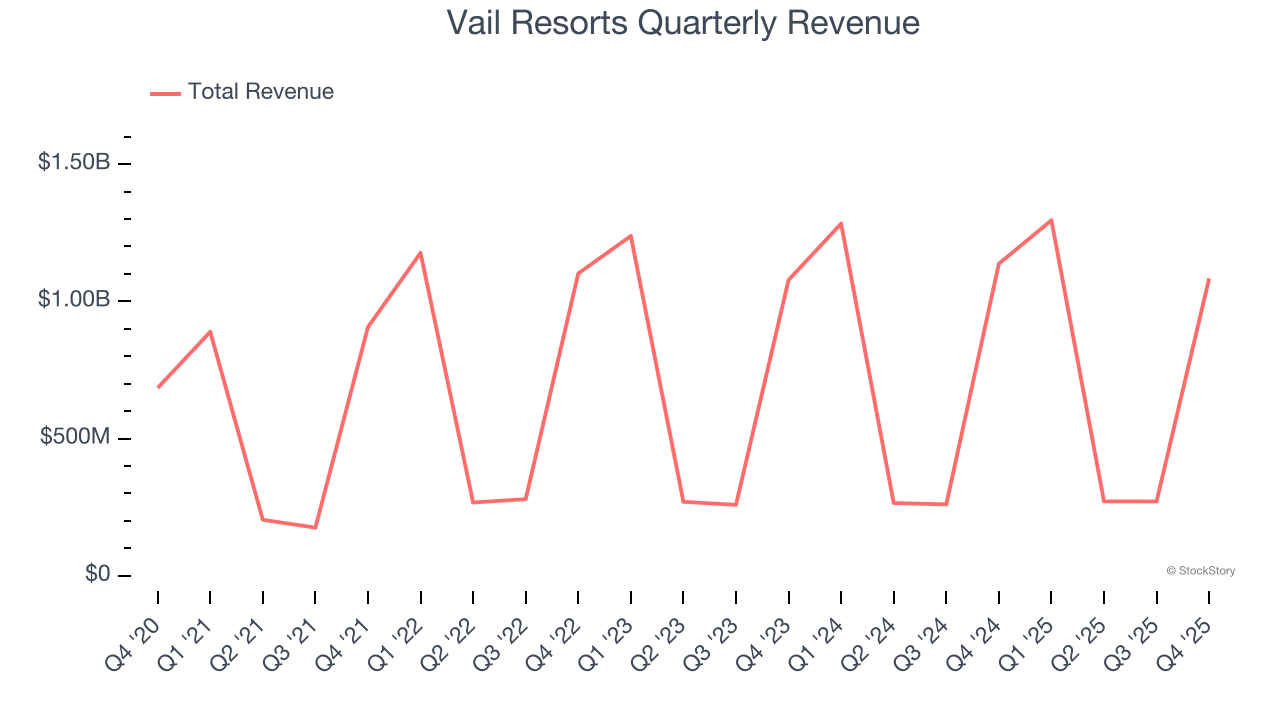
Long-term growth is the most important, but within consumer discretionary, product cycles are short and revenue can be hit-driven due to rapidly changing trends and consumer preferences. Vail Resorts’s recent performance shows its demand has slowed as its annualized revenue growth of 1.3% over the last two years was below its five-year trend. We’re wary when companies in the sector see decelerations in revenue growth, as it could signal changing consumer tastes aided by low switching costs. Note that COVID hurt Vail Resorts’s business in 2020 and part of 2021, and it bounced back in a big way thereafter. 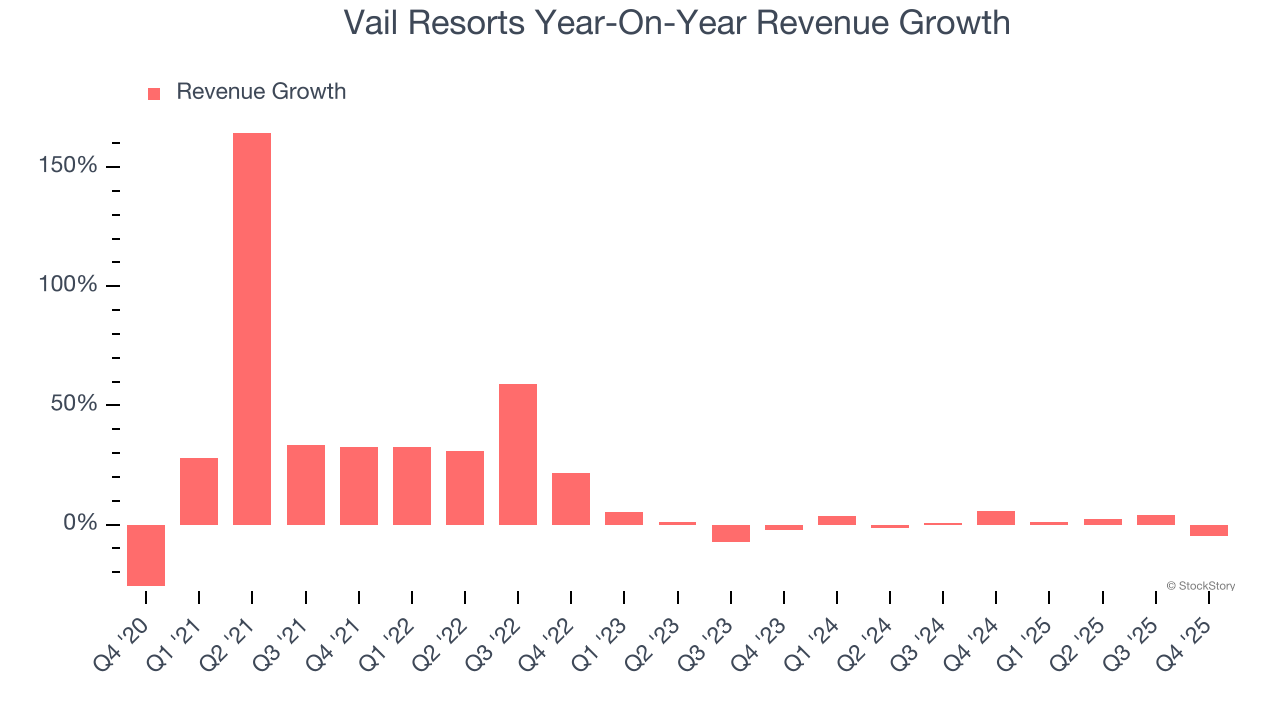
We can dig further into the company’s revenue dynamics by analyzing its number of skier visits, which reached 6.78 million in the latest quarter. Over the last two years, Vail Resorts’s skier visits averaged 6.6% year-on-year growth. Because this number is higher than its revenue growth during the same period, we can see the company’s monetization has fallen. 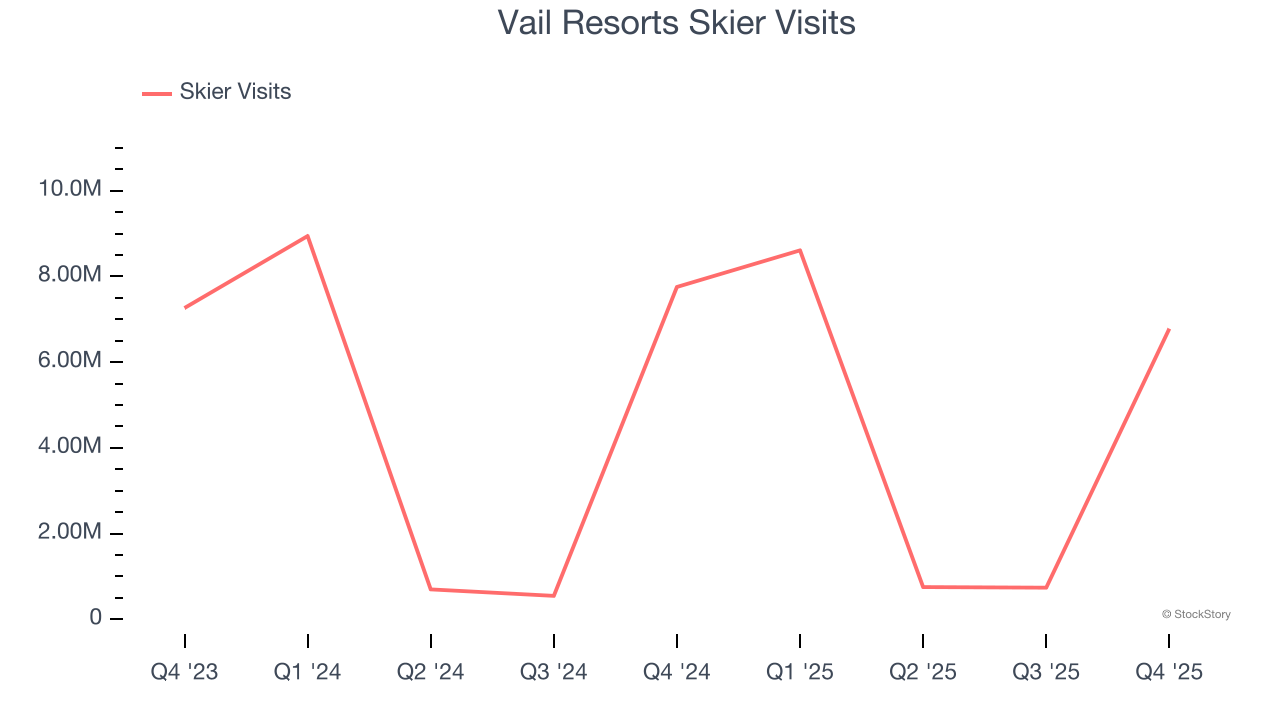
This quarter, Vail Resorts missed Wall Street’s estimates and reported a rather uninspiring 4.7% year-on-year revenue decline, generating $1.08 billion of revenue.
Looking ahead, sell-side analysts expect revenue to grow 3.9% over the next 12 months. Although this projection indicates its newer products and services will spur better top-line performance, it is still below average for the sector.
ALSO WORTH WATCHING: Nvidia’s Quiet Partner. Nvidia’s chips cost a hundred grand. The connectors that make them work cost even more. One company makes them all.
Every AI server needs specialized infrastructure the chip companies don’t make. High-speed cables. Power connectors. Thermal sensors. This 90-year-old company built a monopoly on it. The AI boom just started. This stock is still flying under the radar. Claim The Stock Ticker Here for FREE.
Operating Margin
Operating margin is an important measure of profitability as it shows the portion of revenue left after accounting for all core expenses – everything from the cost of goods sold to advertising and wages. It’s also useful for comparing profitability across companies with different levels of debt and tax rates because it excludes interest and taxes.
Vail Resorts’s operating margin has more or less stayed the same over the last 12 months , and we generally like to see margin increases due to economies of scale and cost efficiency over time.
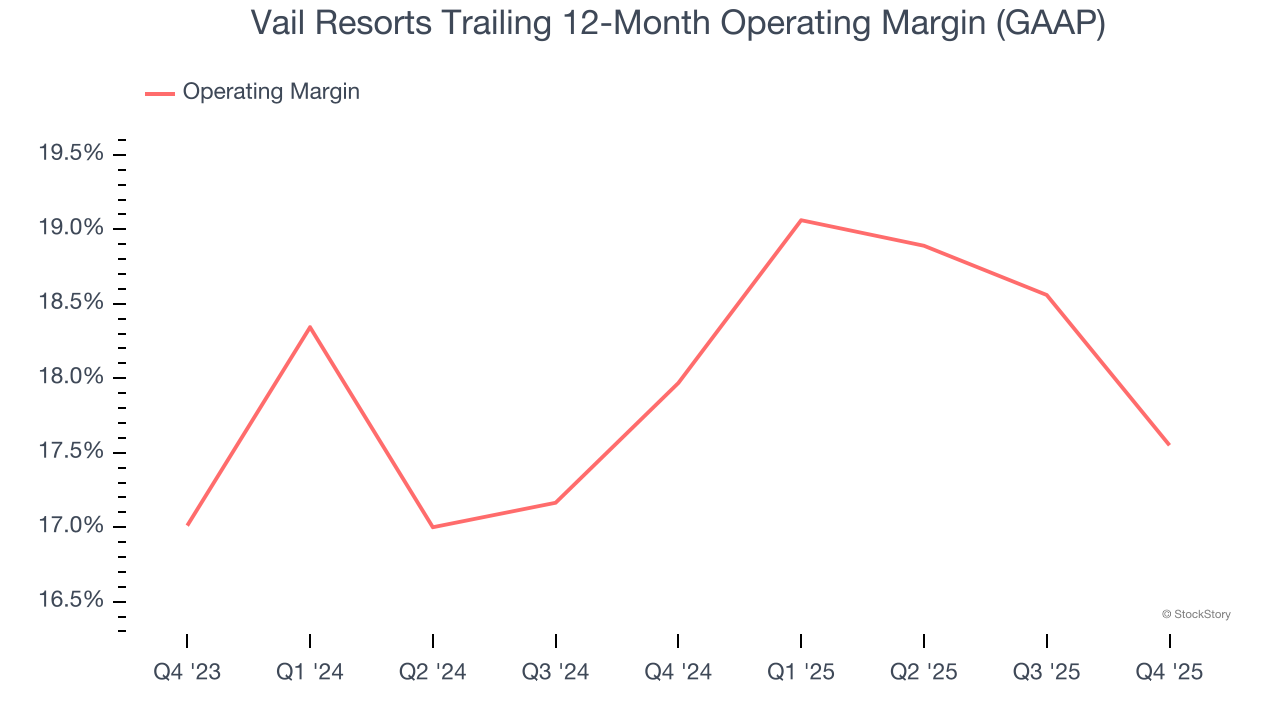
In Q4, Vail Resorts generated an operating margin profit margin of 31.8%, down 2 percentage points year on year. This reduction is quite minuscule and indicates the company’s overall cost structure has been relatively stable.
Earnings Per Share
Revenue trends explain a company’s historical growth, but the long-term change in earnings per share (EPS) points to the profitability of that growth – for example, a company could inflate its sales through excessive spending on advertising and promotions.
Vail Resorts’s full-year EPS flipped from negative to positive over the last five years. This is encouraging and shows it’s at a critical moment in its life.
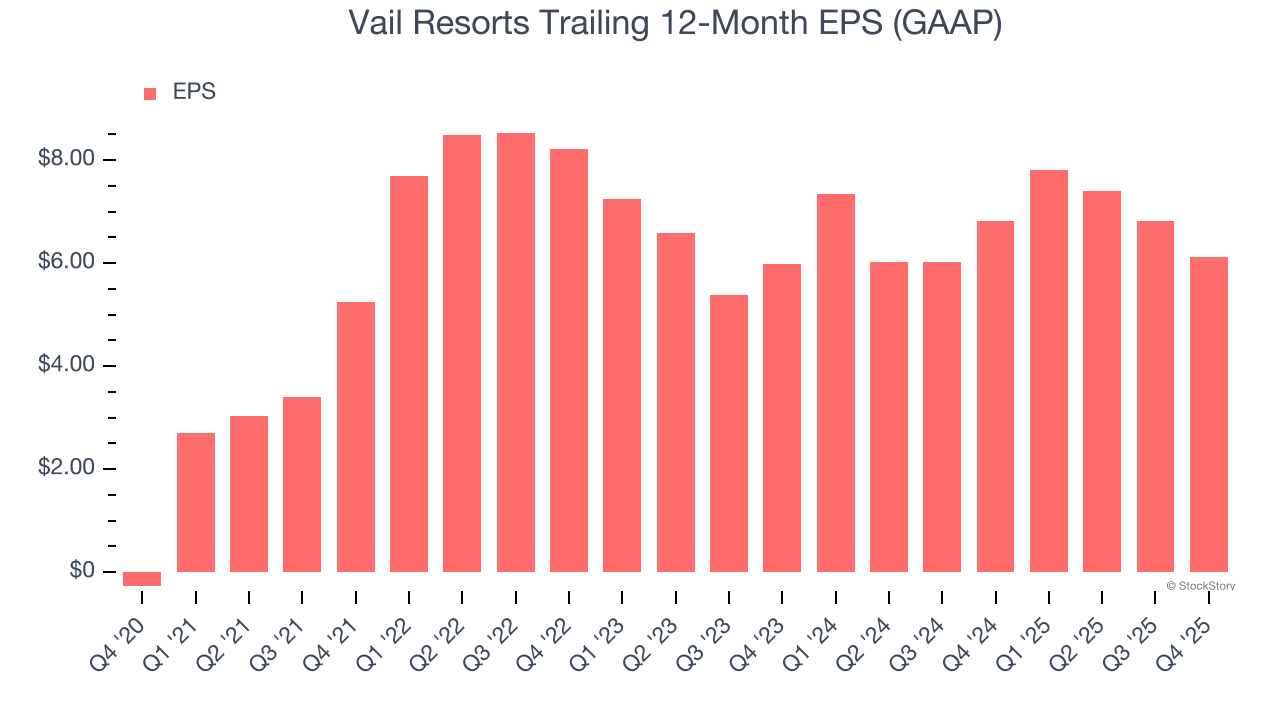
In Q4, Vail Resorts reported EPS of $5.87, down from $6.56 in the same quarter last year. This print missed analysts’ estimates, but we care more about long-term EPS growth than short-term movements. Over the next 12 months, Wall Street expects Vail Resorts’s full-year EPS of $6.13 to grow 18.2%.
Key Takeaways from Vail Resorts’s Q4 Results
We struggled to find many positives in these results. Its full-year EBITDA guidance missed and its EPS fell short of Wall Street’s estimates. Overall, this was a softer quarter. The stock traded down 3.1% to $130.00 immediately after reporting.
Vail Resorts didn’t show it’s best hand this quarter, but does that create an opportunity to buy the stock right now? When making that decision, it’s important to consider its valuation, business qualities, as well as what has happened in the latest quarter. We cover that in our actionable full research report which you can read here (it’s free).