Introduction
As of December 25, 2025, the global pharmaceutical landscape is witnessing a seismic shift centered on a single Danish company: Novo Nordisk (NYSE: NVO). Long the undisputed king of the insulin market, Novo Nordisk has spent the last five years at the epicenter of the "obesity gold rush." However, the company is currently at a critical crossroads. Just days ago, on December 22, 2025, the U.S. Food and Drug Administration (FDA) granted approval for a once-daily oral version of Wegovy (semaglutide) 25 mg. This milestone represents more than just a new product launch; it is a defensive and offensive masterstroke designed to protect Novo’s market share against rising competition and supply chain vulnerabilities. As the company navigates a leadership overhaul and geopolitical tensions, the "Wegovy Pill" stands as the cornerstone of its survival strategy in a rapidly maturing GLP-1 market.
Historical Background
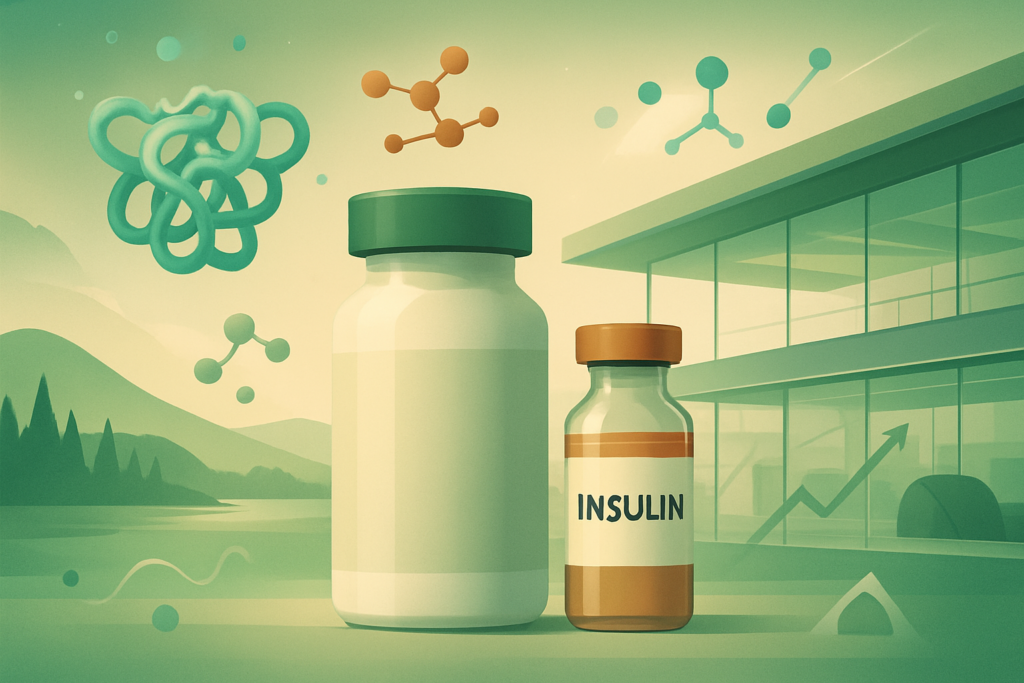
The story of Novo Nordisk is one of scientific necessity and ultimate consolidation. Founded in 1923, the company originated as two separate Danish entities: Nordisk Insulinlaboratorium and Novo Terapeutisk Laboratorium. The founders, Nobel Prize winner August Krogh and his wife Marie—a physician who herself suffered from diabetes—secured the rights to produce insulin in Scandinavia. For over 60 years, these two companies were fierce competitors in the insulin space until their merger in 1989.
The merger created a global powerhouse that eventually pivoted from traditional insulin to glucagon-like peptide-1 (GLP-1) therapies. This transition began in earnest with the approval of Victoza in 2010, followed by the blockbuster semaglutide molecules Ozempic (for diabetes) and Wegovy (for obesity). Today, Novo Nordisk is Europe’s most valuable company by market capitalization, though its 2025 has been defined by the challenges of success.
Business Model
Novo Nordisk operates with a highly concentrated business model. Approximately 94% of its revenue is derived from its Diabetes and Obesity Care segment. The company controls the entire value chain, from early-stage protein engineering to massive internal manufacturing sites in Denmark, France, and the United States.
A unique aspect of its model is its ownership structure. The company is controlled by Novo Holdings A/S, which is wholly owned by the Novo Nordisk Foundation. This structure grants the Foundation 77% of the voting power, theoretically insulating management from the short-termism of public markets. This allows Novo to reinvest heavily in R&D, a necessity given the $6.5 billion to $11 billion it is currently spending to integrate the Catalent manufacturing acquisition to solve its chronic supply shortages.
Stock Performance Overview
The performance of NVO stock has been a tale of two eras. Over the 10-year horizon, the stock has delivered a total return of approximately 109%, reflecting its steady growth in diabetes care. The 5-year return of +48.4% captures the meteoric rise driven by the "Ozempic era," though this figure is significantly lower than it was at the peak in 2024.
The 1-year performance (as of late 2025) tells a different story: a -44.2% correction. Throughout 2025, the stock suffered as Eli Lilly (NYSE: LLY) gained market share with Zepbound and as Novo struggled with the high costs of expanding its manufacturing footprint. However, following the December 22 approval of the oral Wegovy pill, shares have seen a 9% recovery, signaling that investors may believe the bottom is in.
Financial Performance
Financial results for the trailing twelve months ending September 30, 2025, show a company in a state of expensive transformation. Revenue reached $46.71 billion, an 18.6% increase year-over-year. However, earnings per share (EPS) for the third quarter of 2025 dropped by 26.6% compared to the prior year. This decline was largely attributed to the $11.7 billion acquisition of Catalent sites and a global restructuring program.
Despite the EPS dip, Novo’s underlying fundamentals remain robust:
- Gross Profit Margin: ~82%
- Net Profit Margin: ~33%
- Return on Equity (ROE): ~61%
The primary financial concern for investors remains the 2025 sales guidance, which was lowered to 8–14% growth—a far cry from the 30%+ growth rates seen during the initial Wegovy launch.
Leadership and Management
The leadership of Novo Nordisk underwent a "palace revolution" in late 2025. In August, long-time CEO Lars Fruergaard Jørgensen was replaced by Maziar "Mike" Doustdar. This was followed by a major board purge in November 2025, orchestrated by the Novo Nordisk Foundation, which replaced half the board members, including the Chairman. The mandate for the new team is clear: accelerate the transition to oral medications and defend against the aggressive expansion of Eli Lilly. Doustdar has already initiated a 9,000-person workforce reduction (roughly 11% of the staff) to lean out the organization for a more competitive 2026.
Products, Services, and Innovations
The jewel in the crown is the newly approved oral Wegovy pill. Based on the OASIS 4 clinical trials, the 25 mg dose demonstrated a 16.6% weight loss over 64 weeks.
- The Advantage: Unlike the injectable version, the pill does not require refrigeration or the complex manufacturing of "autoinjector" pens, which have been the primary cause of supply shortages.
- Pipeline: Beyond Wegovy, Novo is betting on CagriSema, a combination therapy that has shown weight loss of ~22.7% in Phase 3 trials.
- MASH and Alzheimer's: Novo is also diversifying the semaglutide molecule, recently gaining FDA approval for Metabolic Dysfunction-Associated Steatohepatitis (MASH) and conducting high-stakes Phase 3 trials (EVOKE) for Alzheimer’s disease.
Competitive Landscape
The "duopoly" between Novo Nordisk and Eli Lilly has shifted in Lilly’s favor during 2025. Eli Lilly’s Zepbound currently holds approximately 40% of the U.S. obesity market and has shown superior weight loss results (20.2%) in head-to-head trials.
Furthermore, new challengers are emerging:
- Amgen (NASDAQ: AMGN): Developing MariTide, a once-monthly injectable.
- Viking Therapeutics (NASDAQ: VKTX): Its dual-agonist candidate VK2735 is entering Phase 3 with promising data.
- Compounding Pharmacies: Unbranded "copycat" semaglutide has siphoned billions in revenue from Novo, a trend the company hopes to reverse with its new direct-to-consumer platform.
Industry and Market Trends
The industry is moving toward "convenience and coverage." The shift from weekly injections to daily pills is the defining trend of 2025-2026. Simultaneously, the market is grappling with the "compounding crisis," where shortages led to the rise of unbranded GLP-1s. Novo’s response, the NovoCare platform, offers the starting dose of the Wegovy pill for $149 per month, a strategic price point meant to undercut compounding pharmacies and regain "new-to-brand" patients.
Risks and Challenges
Novo Nordisk faces a "triple threat" of risks:
- Patent Cliffs: While U.S. patents are safe until 2031, patents in China, India, and Brazil are set to expire in early 2026, which will likely trigger a wave of low-cost biosimilars in emerging markets.
- Regulatory Pricing: Under the Inflation Reduction Act (IRA), the U.S. government has negotiated the price of Ozempic down to $274 per month starting in 2027—a 71% discount from list prices.
- Manufacturing Integration: The $11 billion Catalent acquisition is a massive bet that must be executed flawlessly to resolve supply issues without further diluting margins.
Opportunities and Catalysts
The primary catalyst for 2026 is the commercial launch of the oral Wegovy pill. By bypassing the "needle barrier," Novo expects to tap into a massive segment of patients who previously avoided GLP-1s. Additionally, the potential expansion into Alzheimer’s treatment remains a "moonshot" opportunity that could add billions to the company’s valuation if the EVOKE trials prove successful in 2026.
Investor Sentiment and Analyst Coverage
Wall Street sentiment is currently cautiously defensive. Major firms like Goldman Sachs maintain a "Buy" rating based on the Alzheimer's potential, while Morgan Stanley has issued an "Underweight" rating, citing concerns that the obesity market is becoming commoditized. Hedge fund positioning shows a slight bearish lean, with "Put" options outweighing "Calls" as of late December 2025, reflecting uncertainty over the recent leadership changes.
Regulatory, Policy, and Geopolitical Factors
Geopolitics has become a surprising headwind for Novo Nordisk. In late 2025, tensions between the U.S. and Denmark rose following U.S. political interest in Greenland, leading to threats of tariffs on Danish pharmaceutical exports ranging from 10% to 54%. Because Novo Nordisk is so vital to the Danish economy, any trade friction with the U.S. poses a systemic risk to the company’s valuation and Denmark’s national GDP.
Conclusion
Novo Nordisk enters 2026 as a titan under siege. The FDA approval of the Wegovy pill is a critical lifeline, offering a way to bypass manufacturing bottlenecks and fight back against Eli Lilly and compounding pharmacies. However, investors must weigh this innovation against the realities of Medicare price caps, looming international patent cliffs, and a massive internal restructuring. While the "Wegovy Pill" may secure Novo’s place in the medicine cabinets of millions, the company's ability to maintain its premium valuation will depend on its execution of the Catalent integration and its ability to weather the geopolitical storms brewing between Washington and Copenhagen.
This content is intended for informational purposes only and is not financial advice.