In a move that has sent shockwaves through the mining sector, Barrick Gold (NYSE: GOLD) announced a staggering 140% increase in its quarterly dividend on February 5, 2026. The gold mining giant raised its payout to $0.42 per share, a bold declaration of financial strength fueled by a historic bull run in precious metals and a highly successful pivot into copper production. The announcement came alongside the company’s Q4 2025 earnings report, which showcased record-breaking margins and a strategic evolution that has repositioned the firm as a "Tier One" global resource powerhouse.
The dividend hike is underpinned by gold prices that have sustained levels near $4,600 per ounce throughout the latter half of 2025, combined with a surge in industrial demand for copper. This rare alignment of high prices across Barrick’s primary commodities has allowed the company to generate massive free cash flow, much of which is now being returned to shareholders. The market’s reaction was immediate, with Barrick’s stock surging in early trading as investors digest the implications of a company that is no longer just a gold play, but a diversified industrial titan.
A Financial Fortress: Record Margins and Leadership Shifts
Barrick Gold's (NYSE: GOLD) performance in the final quarter of 2025 was nothing short of extraordinary. The company reported that its "dual-commodity strategy" has reached a critical milestone, with copper now contributing 30% of the group’s total EBITDA. This diversification has proven to be a masterstroke, insulating the company from the historical volatility of the gold market while capturing the tailwinds of the global energy transition. With copper prices hovering around $5.42 per pound, Barrick’s copper assets have become high-margin engines of growth rather than secondary offsets.
The quarter also marked a significant turning point in corporate leadership. Barrick confirmed the appointment of Helen Cai as the new Chief Financial Officer, effective March 1, 2026. Cai, a former executive at Goldman Sachs (NYSE: GS) and a seasoned veteran of the mining and M&A sectors, succeeds Graham Shuttleworth during a period of intense structural change. Her appointment is seen as a strategic move to oversee the upcoming IPO of Barrick’s North American gold assets—a new entity tentatively called "NewCo"—which will allow the parent company to focus more aggressively on international copper-gold projects like Reko Diq and Lumwana.
Operationally, the company’s margins have expanded to unprecedented levels, exceeding 160% in specific tier-one jurisdictions where low-cost extraction met $4,600 gold. This efficiency has been attributed to the aggressive modernization of mines and the successful integration of renewable energy grids at major sites, which significantly lowered operational costs during a period of high global energy inflation.
The Winners and Losers of the New Mining Landscape
Barrick’s aggressive dividend policy and structural pivot create a ripple effect across the industry. Among the primary beneficiaries are the shareholders of Barrick Gold (NYSE: GOLD), who are seeing the fruits of a long-term capital allocation strategy. However, the move also puts immense pressure on peers like Newmont Corporation (NYSE: NEM) and Agnico Eagle Mines (NYSE: AEM) to increase their own shareholder returns. Newmont, in particular, may face scrutiny from activist investors if it cannot match the yield and growth trajectory Barrick has established through its copper-heavy diversification.
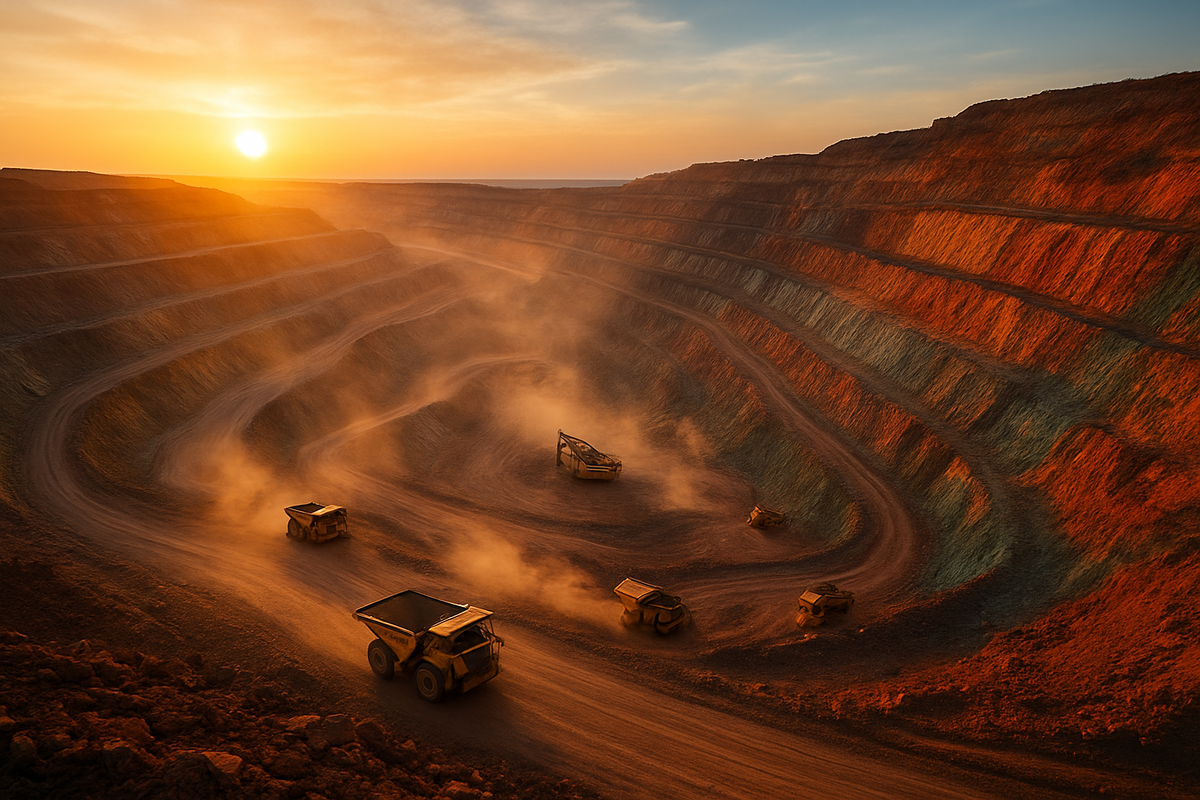
On the copper front, Barrick’s rapid expansion into the space makes it a formidable competitor to pure-play copper giants like Freeport-McMoRan (NYSE: FCX). While Freeport remains the industry leader, Barrick’s ability to use gold as a natural hedge provides it with a lower cost of capital and greater resilience during economic downturns. Conversely, junior mining firms may find themselves "losers" in this environment; as Barrick and other majors focus on massive "Super Pit" expansions and tier-one assets, venture capital is increasingly being sucked toward these established titans, leaving smaller exploration companies struggling to find funding for smaller-scale projects.
In Zambia, the government and local contractors are emerging as major winners. The $2 billion expansion of the Lumwana mine is transforming the region into a global copper hub, creating thousands of jobs and generating significant tax revenue. Similarly, in Pakistan, the Reko Diq project is being hailed as a sovereign-level economic catalyst, though it remains a high-risk, high-reward venture for Barrick due to the complex geopolitical landscape.
A Shift in the Global Mining Paradigm
The success of Barrick’s dual-commodity strategy signals a broader shift in how the world’s largest miners operate. For decades, gold miners were expected to stay in their lane, focusing solely on precious metals. However, the global energy transition has made copper a "strategic" metal, essential for electric vehicles and renewable energy infrastructure. Barrick’s ability to derive 30% of its EBITDA from copper is a blueprint that other gold miners are now expected to follow.
This event also highlights the growing importance of "mega-projects" in frontier markets. The progression of the Reko Diq project in Pakistan and the Lumwana "Super Pit" in Zambia shows that Barrick is willing to navigate extreme geopolitical risks to secure the massive, long-life assets required to sustain its new dividend model. This marks a departure from the conservative "safe-jurisdiction" focus of the mid-2010s and suggests that the future of mining lies in a company’s ability to manage complex international relationships as much as its ability to dig ore.
From a regulatory standpoint, Barrick’s record margins at $4,600 gold may invite increased calls for windfall taxes in various jurisdictions. As governments grapple with fiscal deficits, the sight of mining companies reporting 160% margins could lead to new royalty debates, particularly in Africa and South America. Historically, similar price spikes have led to a wave of resource nationalism, a precedent that Barrick’s management is likely watching closely.
The Road Ahead: IPOs and "Super Pits"
Looking toward the remainder of 2026, the market will be laser-focused on the IPO of Barrick’s North American assets. This spin-off is expected to be one of the largest mining transactions of the decade, potentially creating a "pure-play" gold giant (NewCo) while leaving the parent Barrick Gold (NYSE: GOLD) to operate as a high-growth, copper-focused diversified miner. The challenge for Helen Cai and the executive team will be ensuring that the market values both entities appropriately, rather than applying a "conglomerate discount."
In the short term, the completion of the Lumwana expansion will be the primary operational benchmark. If Barrick can successfully double throughput to 52 million tonnes per year, it will solidify its position as a top-25 global copper producer. However, risks remain. The Reko Diq project, while financially closed, still faces significant security and infrastructure hurdles in Pakistan. Any delay there could dampen the current investor euphoria.
The long-term scenario for Barrick hinges on the sustainability of current commodity prices. While $4,600 gold has provided the "rocket fuel" for the current dividend hike, a sudden cooling of global inflation or a resolution to geopolitical tensions could see prices revert. Barrick is betting that its low-cost structure and copper hedge will protect it even if the gold bull market loses steam.
Investor Wrap-Up: A New Era of Yield and Growth
Barrick Gold’s February 5, 2026, announcement marks the definitive end of the "austerity era" for the company. By hiking the dividend by 140%, Barrick has transitioned from a company focused on debt reduction to one focused on aggressive shareholder returns and massive infrastructure growth. The 30% EBITDA contribution from copper is no longer a goal but a reality, providing a unique value proposition that blends the safety of gold with the industrial upside of the green energy revolution.
Investors should monitor the upcoming North American IPO and the quarterly updates from the Reko Diq project as the primary catalysts for late 2026. The appointment of Helen Cai as CFO suggests a move toward more sophisticated financial engineering and potentially further M&A activity as the company seeks to maintain its 30% copper target.
As the mining sector enters this high-margin, high-stakes era, Barrick Gold (NYSE: GOLD) has set the pace. Whether its competitors can keep up or if the "dual-commodity" model will face unexpected headwinds remains the most important question for the market in the months to come. For now, the "Super Pit" expansion and the record dividend have made Barrick the undisputed king of the 2026 mining landscape.
This content is intended for informational purposes only and is not financial advice.