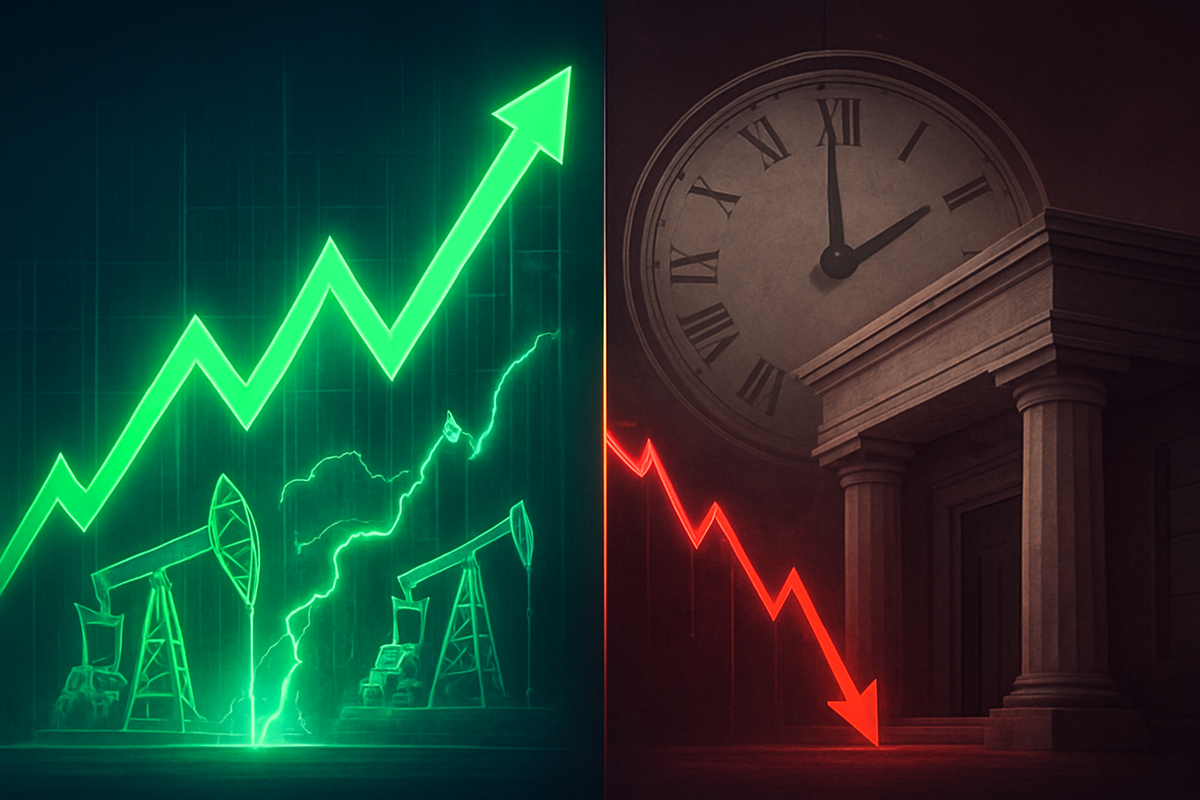
In a dramatic display of market bifurcation, U.S. equity sectors have split into two distinct camps today, February 20, 2026. The high-octane growth of the Technology sector and the resurgent dominance of Energy are currently spearheading a market rally, even as the "bond proxy" sectors—Utilities and Real Estate—suffer under the weight of a hawkish Federal Reserve. This sharp divergence underscores a fundamental shift in investor sentiment, as the optimism surrounding artificial intelligence and geopolitical supply constraints outweighs the traditional safety of defensive stocks in a "higher-for-longer" interest rate environment.
The immediate implication of this divergence is a reshuffling of the "soft landing" narrative. While inflation has cooled significantly from its 2022 peaks, the latest Producer Price Index (PPI) data released this week suggests that service-side inflation remains stubbornly high at 3.2%. This has effectively neutralized hopes for a spring rate cut, sending the 10-year Treasury yield climbing and triggering a massive rotation out of yield-sensitive assets. For the broader market, this means that while the headline indices may remain buoyant thanks to the outsized influence of mega-cap tech and energy giants, the "average" stock is facing increasingly tightening financial conditions.
The Tale of Two Markets: A Timeline of Divergence
The current market rift reached a fever pitch following the Federal Open Market Committee (FOMC) meeting in late January, where the Federal Reserve maintained the benchmark interest rate at 3.5%–3.75%. Chair Jerome Powell’s "meeting-by-meeting" rhetoric effectively signaled a pause in the rate-cut cycle that many had expected to continue through 2026. This hawkish tilt was the catalyst for a volatile February, which saw a "Flash Panic" on February 17, where algorithmic trading triggered a temporary 3% dip in the Nasdaq before buyers stepped back in to scoop up artificial intelligence leaders.
The Energy sector's ascent has been even more calculated. Driven by a geopolitical premium—including renewed tensions with Iran and the significant infrastructure rebuilding projects following the regime change in Venezuela—crude oil prices have stabilized between $70 and $72 per barrel. This has allowed U.S. shale producers and global supermajors to report record free cash flow. In contrast, the Real Estate sector is grappling with a looming "maturity wall," with nearly $1 trillion in commercial real estate (CRE) loans set to be refinanced at rates significantly higher than their originations. The liquidity concerns triggered by this debt pile have led to a persistent sell-off in Real Estate Investment Trusts (REITs) throughout the morning session.
The Winners and Losers of the New Macro Regime
In the Energy sector, ExxonMobil (NYSE: XOM) and Chevron (NYSE: CVX) have emerged as the undisputed titans of the current environment. ExxonMobil is trading at multi-year highs today, up 26% year-to-date, as investors cheer its expansion into the Permian Basin and high-margin production in Guyana. Similarly, Chevron has seen a 21.8% gain this year, benefiting from its strategic acquisition of Hess assets. For these companies, the current inflationary environment is a tailwind, allowing them to exert pricing power and return massive amounts of capital to shareholders via buybacks.
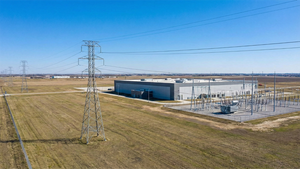
In the Technology space, the story is more nuanced. NVIDIA (NASDAQ: NVDA) remains the "gold standard" of the AI revolution, holding onto gains despite rumors of institutional profit-taking. However, Microsoft (NASDAQ: MSFT) has faced headwinds, trading down approximately 17% from its peak as investors scrutinize its staggering $700 billion AI capital expenditure plans and rumors of a pivot toward in-house models. Meanwhile, in the lagging Utility sector, NextEra Energy (NYSE: NEE) has managed to defy the downward trend of its peers. While the broader Utilities sector is being dumped as a "bond proxy," NextEra is being revalued as an "AI utility" play, thanks to its massive 95-gigawatt pipeline of renewable energy dedicated to powering data centers.
Conversely, the Real Estate sector continues to be the primary victim of the Fed’s persistence. American Tower Corporation (NYSE: AMT), while outperforming some of its office-focused peers due to its essential cellular infrastructure, has still faced selling pressure as investors flee the sector's high debt-to-equity ratios. The "SaaSpocalypse" fears—the idea that AI will cannibalize the subscription models of traditional software firms—has also created a drag on smaller tech players, further widening the gap between the "AI Haves" and the "AI Have-nots."
Wider Significance: AI Infrastructure and the Refinancing Wall
This divergence is more than just a daily market fluctuation; it represents a fundamental re-architecting of the U.S. economy. We are seeing a "Two-Track Economy" where sectors linked to the physical and digital infrastructure of the future—Energy and AI-focused Tech—are able to outpace the drag of high interest rates. The historical precedent for this can be found in the late 1990s, where productivity gains from the internet allowed certain sectors to thrive even as the Fed tightened. However, the current situation is complicated by the $1 trillion commercial real estate debt wall, which poses a systemic risk to regional banks and private credit markets.
The ripple effect is also being felt in the policy world. As Energy prices rise, the Fed faces a "Catch-22": raising or holding rates high to combat energy-driven inflation risks breaking the back of the Real Estate sector. Regulatory scrutiny is also increasing for the Tech sector, as the massive power requirements for AI data centers begin to strain local grids, potentially leading to new mandates on energy efficiency and renewable procurement. This shift suggests that the era of "cheap money" that fueled the 2010s is officially dead, replaced by a "CapEx Era" where only the most well-capitalized firms can survive.
What Comes Next: The Road to the Second Half of 2026
In the short term, investors should expect continued volatility as the market digests the Q1 2026 earnings reports. The key metric will not just be revenue growth, but "AI ROI"—the ability of companies like Microsoft and NVIDIA to prove that their massive investments are yielding tangible productivity gains. If the "SaaSpocalypse" narrative gains more traction, we could see a further rotation out of mid-cap software and into hardware and energy.
Longer-term, the "maturity wall" in Real Estate will reach its peak in late 2026. If the Federal Reserve does not begin a cutting cycle by then, the potential for a localized credit event in the CRE space remains high. Strategic pivots are already underway; expect to see more Real Estate companies attempting to rebrand as "Data Infrastructure" firms and Utilities aggressively lobbying for rate hikes to fund the massive grid upgrades required by the AI boom.
Market Wrap-Up and Investor Outlook
The sharp divergence witnessed today is a clear signal that the market is no longer moving in lockstep. The dominance of Energy and Tech, fueled by geopolitical shifts and the AI arms race, has created a buffer for the major indices, but the struggles of Utilities and Real Estate serve as a sobering reminder of the costs of high interest rates. The "defensive" playbook of the past—simply buying high-dividend payers—is being rewritten in real-time.
Moving forward, the market will likely be defined by "selective growth." Investors should watch the 10-year Treasury yield closely; if it breaks above the 4.5% mark, the pressure on Real Estate and Utilities may become untenable, potentially leading to a broader market correction. However, for those positioned in the "infrastructure of tomorrow," the current divergence offers a glimpse into a new market cycle where energy security and computational power are the ultimate currencies.
This content is intended for informational purposes only and is not financial advice.