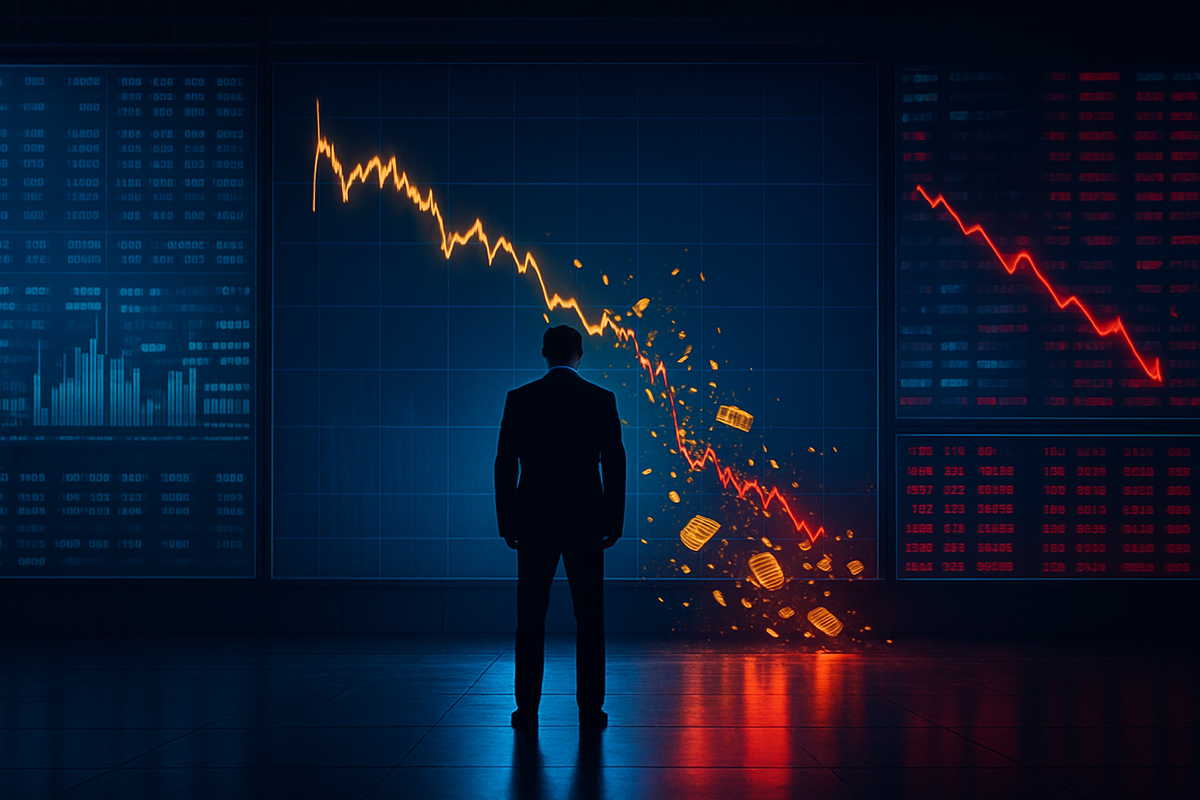
On January 30, 2026, the financial world experienced a "regime shift" that few saw coming with such velocity. The nomination of Kevin Warsh as the next Chairman of the Federal Reserve by the White House effectively lanced the speculative bubble that had propelled precious metals to dizzying heights throughout 2025. By tapping a known monetary hawk and institutionalist, the administration signaled a definitive end to the narrative that the central bank would be subordinated to political pressure for "easy money," leading to a violent repricing of the U.S. dollar and a total collapse of the "debasement trade."
The immediate fallout was staggering. Gold, which had been trading at a record high near $5,600 per ounce, plummeted nearly 15% in the 48 hours following the announcement. Silver followed suit with an even more dramatic "flash crash," dropping from $120 to below $85. For investors who had spent the last year betting on a terminal decline of the greenback, the "Warsh Effect" served as a brutal reminder that the era of fiscal and monetary profligacy may be facing its most formidable opponent yet.
A Hard Money Pivot: The End of the "Political Fed" Narrative
The nomination of Kevin Warsh to succeed Jerome Powell—whose term ends in May 2026—was not merely a personnel change; it was a policy earthquake. Throughout late 2025, markets were gripped by the "debasement trade," a strategy predicated on the belief that the Federal Reserve would be forced to keep interest rates low to accommodate soaring federal debt and political demands for growth. This perception drove the SPDR Gold Shares (NYSE: GLD) and the iShares Silver Trust (NYSE: SLV) to unprecedented levels as investors sought refuge from a perceived "politicized" dollar.
The timeline leading to this moment began in November 2025, when Warsh published a scathing op-ed in the Wall Street Journal titled "The Federal Reserve's Broken Leadership." In it, he argued that inflation is a "choice" made by central banks and signaled a desire to aggressively shrink the Fed’s $6.6 trillion balance sheet. When the nomination was confirmed on January 30, it became clear that the White House had chosen a "market veteran" and "hard money" pragmatist over more dovish candidates. This move immediately restored the market's faith in Fed independence, removing the primary catalyst for the gold rally: the fear of institutional decay.
The reaction on the trading floor was one of pure liquidation. As the U.S. Dollar Index (DXY) surged by over 1% in a single session, the CME Group exacerbated the sell-off by raising margin requirements for gold and silver futures. This triggered a cascade of margin calls, forcing leveraged traders to dump positions into a vacuum of buyers. By the time the dust settled over the weekend, billions in paper wealth had been erased from the precious metals complex.
Winners and Losers: Mining Giants Face a New Reality
The "Warsh Effect" left no corner of the mining sector untouched. Major producers, which had been enjoying record margins as gold prices climbed, saw their stock prices decimated in the wake of the nomination. Newmont Corp (NYSE: NEM), the world's largest gold miner, saw its shares tumble 11.49% to $112.35 on nearly double its average trading volume. Similarly, Barrick Gold (NYSE: GOLD) slumped over 12% to $45.79, retreating from its peak near $54 reached only days prior.
Silver-leveraged plays were hit even harder due to the metal's higher volatility. Pan American Silver (NYSE: PAAS) saw a staggering 13.73% decline, closing at $54.60. For these companies, the paradigm has shifted from "riding the price wave" to an urgent focus on operational efficiency. Analysts now expect a "higher-for-longer" interest rate environment under Warsh, which increases the cost of capital for capital-intensive mining projects and forces a re-evaluation of long-term reserve values based on lower spot price assumptions.
Conversely, the "winners" of this event are those positioned for a resurgent dollar and a return to "normal" monetary policy. Large-cap financial institutions and dollar-sensitive technology firms saw a rotation of capital in their favor. Short-sellers who had been betting against the "overextended" metals market realized massive gains, while quantitative trading desks at firms like Morgan Stanley and Goldman Sachs reported record-breaking outflows from GLD as their algorithms triggered automatic sell orders on the break of key technical supports.
Broad Significance: A Regime Shift in Global Markets
The nomination of Kevin Warsh marks a significant departure from the "Quantitative Easing (QE) dogma" that has defined central banking since 2008. By selecting an outspoken critic of massive balance sheet expansion, the administration has signaled that the "Fed Put"—the idea that the central bank will always step in to prop up markets with liquidity—may be dead. This fits into a broader industry trend where "hard assets" are being de-emphasized in favor of "productivity assets," particularly those linked to the ongoing artificial intelligence revolution.
Historically, this event draws comparisons to Paul Volcker’s appointment in 1979, which similarly broke the back of a decade-long inflationary gold bull market. Just as Volcker prioritized the dollar's credibility over short-term market stability, Warsh is expected to prioritize "hard reality" and a leaner Fed footprint. This has profound ripple effects for global competitors; central banks in Europe and Asia, which had been hedging against U.S. fiscal instability by buying gold, are now forced to reconsider their reserves as the dollar re-establishes its "cleanest shirt in the dirty laundry" status.
Furthermore, the "Warsh Effect" has policy implications that extend beyond interest rates. His skepticism of the Fed’s expansive regulatory reach suggests a period of deregulation for the banking sector, which could further bolster the dollar's attractiveness. The "debasement trade" wasn't just about inflation; it was a vote of no-confidence in the U.S. financial system. Warsh’s arrival has, at least temporarily, restored that confidence.
The Road Ahead: What to Watch for in a Warsh Era
In the short term, the precious metals market is likely to remain in a period of painful consolidation. The technical damage done to the charts of gold and silver is immense, and it may take months, if not years, for the "fear-based" buyers to return with the same fervor seen in 2025. Investors should watch for the first official statements from Warsh following his swearing-in, as any specific details on balance sheet reduction (Quantitative Tightening) could spark further volatility in the bond and metals markets.
Long-term, the focus will shift to whether Warsh can actually balance his "hard money" instincts with the reality of a $37 trillion national debt. Some analysts, including those at JPMorgan, suggest that the current sell-off may eventually create a "buying opportunity" for miners like Barrick Gold, provided they can maintain low all-in sustaining costs (AISC). However, the "mania phase" of the gold market is officially over. The strategic pivot for investors now involves moving away from "safety at any price" and toward assets that benefit from a stable currency and rising productivity.
Summary and Market Outlook
The nomination of Kevin Warsh has fundamentally altered the landscape of the 2026 financial markets. By dismantling the narrative of monetary subordination, the "Warsh Effect" has successfully re-anchored the U.S. dollar and punctured one of the greatest speculative rallies in the history of precious metals. The "debasement trade," which felt like a "sure bet" only weeks ago, has been revealed as a crowded and vulnerable position.
Moving forward, the market will be characterized by a "return to fundamentals." Investors should keep a close eye on the Federal Open Market Committee (FOMC) meetings in the second half of 2026 to see if Warsh follows through on his hawkish rhetoric. While the long-term structural issues of U.S. debt remain, the immediate threat of a "devalued dollar" has been neutralized by a single personnel choice. For the precious metals sector, the "parabolic" days are gone, replaced by a new era of "hard money" reality.
This content is intended for informational purposes only and is not financial advice