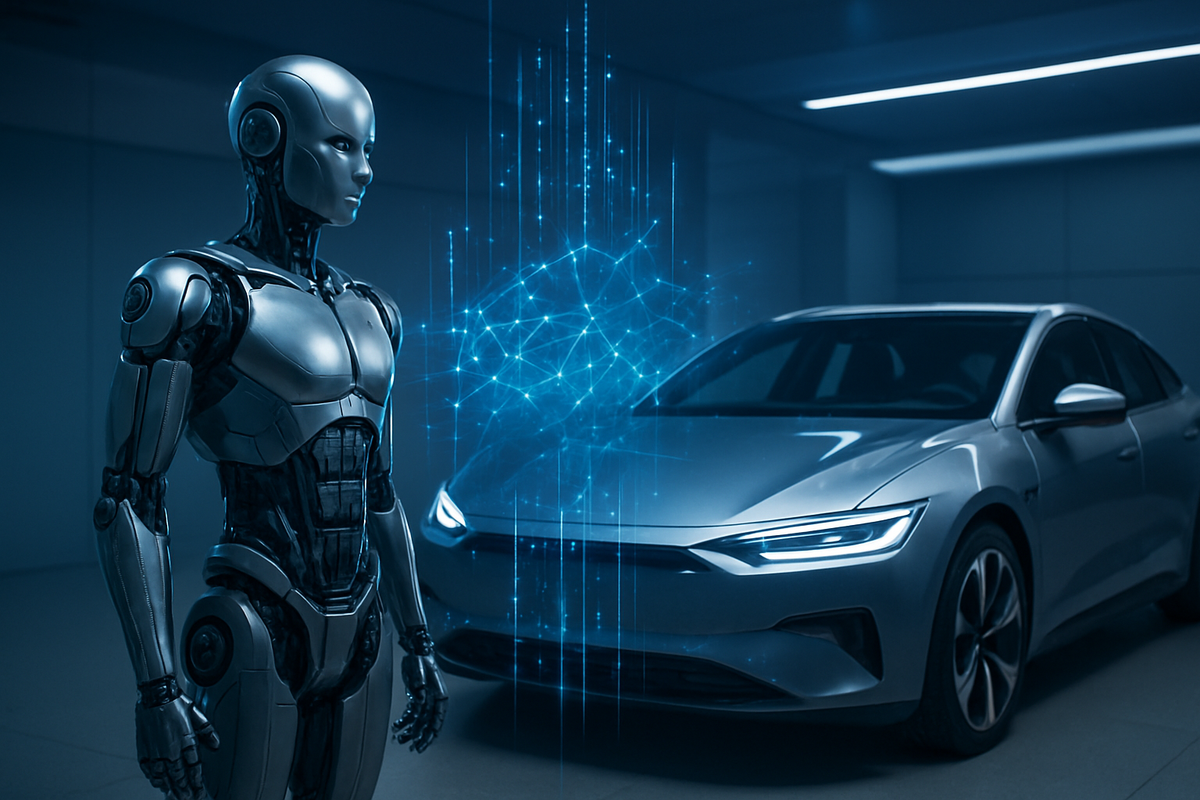
The landscape of autonomous systems underwent a seismic shift this week as Mobileye (Nasdaq: MBLY) officially announced its acquisition of Mentee Robotics during the 2026 Consumer Electronics Show (CES) in Las Vegas. The deal, valued at approximately $900 million, signals a bold pivot for the Jerusalem-based tech giant, moving beyond its traditional stronghold in automotive safety and autonomous driving into the burgeoning field of general-purpose humanoid robotics.
This strategic maneuver, which CEO Prof. Amnon Shashua has dubbed "Mobileye 3.0," is designed to consolidate the company’s leadership in "Physical AI"—the integration of advanced machine learning with physical machines that interact with human environments. By bringing Mentee Robotics into the fold, Mobileye is not just expanding its product portfolio; it is betting that the same core technologies used to navigate a sedan through city traffic will eventually power the robots that stock our warehouse shelves and assist in our homes.
The Mechanics of the Deal: Consolidating the Vision of Amnon Shashua
The acquisition, announced on January 6, 2026, is structured as a combination of $612 million in cash and approximately 26.2 million shares of Mobileye Class A common stock. Given that Prof. Amnon Shashua co-founded both companies, the transaction faced rigorous scrutiny to ensure fair valuation. The deal was proposed and vetted by a strategic committee of independent directors and ultimately received the blessing of Intel (Nasdaq: INTC), which remains Mobileye’s majority shareholder. Shashua recused himself from the formal board vote to maintain corporate governance standards.
Mentee Robotics has spent the last several years developing its third-generation humanoid platform, the "MenteeBot." Standing 175cm tall and weighing 72kg, the robot is designed to learn through a "human-to-robot mentoring" process. Unlike traditional robotics that require rigid programming, MenteeBot utilizes Vision-Language-Action (VLA) models, allowing it to understand verbal instructions and mimic human movements. The acquisition is expected to close by the end of the first quarter of 2026, with Mentee’s engineering team integrating directly into Mobileye’s research and development arms.
Initial industry reactions have been overwhelmingly positive. Following the CES announcement, Mobileye’s stock surged between 8% and 10% in extended trading. Analysts from Morgan Stanley and RBC Capital Markets noted that while the automotive sector remains Mobileye's bread and butter, the acquisition provides a necessary hedge against the cyclical nature of the car market and the plateauing growth of standard Advanced Driver Assistance Systems (ADAS).
Winners and Losers: The Shifting Competitive Landscape
The primary winner in this transaction appears to be Intel (Nasdaq: INTC). As the majority owner of Mobileye, Intel stands to benefit from the diversification of its subsidiary’s revenue streams. Furthermore, the integration of Mobileye’s EyeQ chips into humanoid robots provides a massive new vertical for Intel’s foundry and chip-design ambitions. Mobileye itself also emerges as a stronger contender for top-tier AI talent, offering engineers the chance to work on both automotive and humanoid applications under one roof.
On the other side of the ledger, the deal places significant pressure on Tesla (Nasdaq: TSLA). For years, Elon Musk has touted the Tesla Optimus program as the company's most important long-term project. With Mobileye now entering the humanoid space, Tesla faces a competitor with a massive real-world data advantage. As of early 2026, Mobileye’s fleet has harvested over 32 billion miles of road data, a treasure trove of information that can be repurposed to train robots on how to navigate human-centric environments safely and predictably.
Other players in the "Physical AI" space, such as Figure AI and Boston Dynamics (owned by Hyundai), now face a more crowded and well-capitalized market. While these companies have made strides in hardware, Mobileye’s ability to mass-produce vision-based systems at a low cost could disrupt the pricing models of the entire robotics industry. Conversely, smaller robotics startups may see this acquisition as a positive signal, potentially sparking a fresh wave of venture capital investment and M&A activity across the sector.
The Convergence of Automotive and Robotics
The acquisition of Mentee Robotics is a clear indication that the barriers between autonomous driving and general robotics are dissolving. Both fields rely on the same technological pillars: high-fidelity computer vision, real-time path planning, and the ability to handle "long-tail" scenarios—rare and unpredictable events that occur in the real world. Mobileye’s "Real2Sim2Real" technology, which allows for high-fidelity simulation training, is expected to be a game-changer for Mentee’s humanoid development.
This move fits into a broader industry trend where "AI" is no longer confined to chatbots and digital assistants. The next frontier is Physical AI, where the intelligence is embedded into machines that can move, lift, and interact. By acquiring Mentee, Mobileye is positioning itself to be the "brain" provider for this new generation of machines. This mirrors the company’s historical role in the automotive industry, where its EyeQ chips became the standard for vision-based safety.
However, the path forward is not without regulatory and policy hurdles. As humanoid robots move from controlled warehouse environments into the public sphere and eventually homes, safety standards will need to be rewritten. Mobileye’s long history of working with global automotive regulators and its "Responsibility-Sensitive Safety" (RSS) model may give it a significant advantage in navigating these complex legal landscapes, compared to newer, less-regulated entrants in the robotics space.
Roadmap to 2030: From Industrial PoCs to the Household Robot
The immediate future for the combined entity will focus on industrial applications. Mobileye has outlined a roadmap that begins with on-site proof-of-concept (PoC) deployments in 2026. These initial trials will likely take place in highly structured environments like fulfillment centers and assembly lines, where the MenteeBot can perform repetitive tasks such as moving heavy crates or sorting inventory.
By 2028, Mobileye aims to reach series production for industrial-grade humanoid robots. The ultimate goal, however, is set for 2030: the commercialization of a household version of the MenteeBot. To reach this milestone, the company must overcome significant cost barriers. Mobileye’s strategy involves leveraging its internal hardware capabilities to bring the cost of a humanoid robot down to below $20,000—roughly the price of a budget car.
The transition will require a strategic pivot in how Mobileye manages its supply chain and partnerships. While they have traditionally sold chips and software to Original Equipment Manufacturers (OEMs), they may now find themselves as a direct manufacturer of end-user hardware, or at the very least, a primary integrator for a new class of robotics OEMs.
Conclusion: A New Chapter for Mobileye and the Market
The acquisition of Mentee Robotics marks a pivotal moment in Mobileye’s history. It represents a transition from a company that helps cars "see" to a company that helps machines "act." By integrating Mentee’s humanoid technology with its own world-class computer vision and mapping capabilities, Mobileye is making a definitive play to lead the Physical AI revolution.
For investors, the key takeaways are clear: Mobileye is no longer just a bet on the future of cars; it is a bet on the future of labor and automation. The $900 million price tag is substantial, but if the company can successfully translate its automotive expertise into the robotics sector, the long-term returns could dwarf its current valuation. The synergy between the two companies provides a unique technological edge that few competitors can match.
In the coming months, the market should watch for the first PoC announcements and any updates on the integration of the EyeQ7 chip into the MenteeBot platform. As the lines between the digital and physical worlds continue to blur, Mobileye’s move into robotics may well be remembered as the moment the company secured its place in the next industrial revolution.
This content is intended for informational purposes only and is not financial advice.