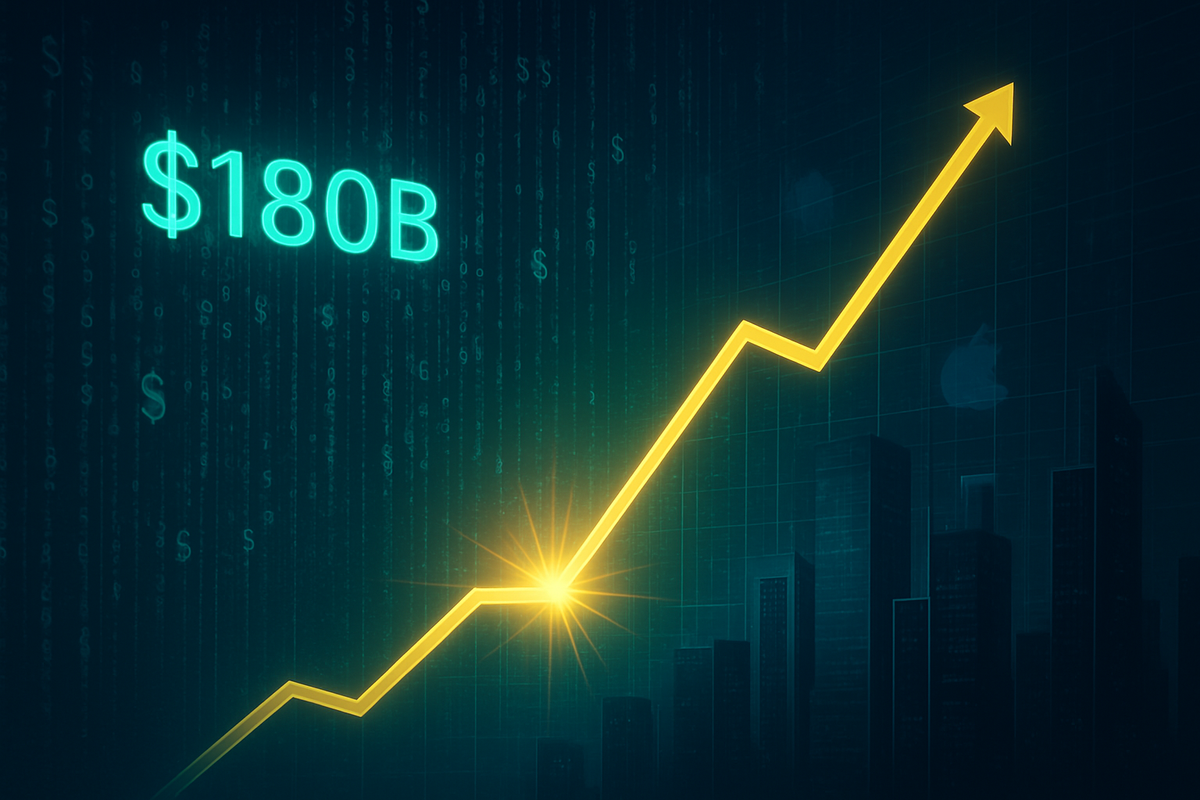
In the opening months of 2024, the American corporate landscape witnessed a tectonic shift in capital allocation strategy. S&P 500 companies, led by a cadre of cash-flush technology giants, announced a staggering $180 billion in new stock buyback authorizations during the first quarter. This massive wave of commitments signaled a definitive end to the cautious "wait-and-see" approach that characterized much of 2023, effectively setting the stage for what we now recognize in early 2026 as a multi-year period of unprecedented shareholder returns.
The immediate implications were profound. The surge in buyback activity acted as a powerful tailwind for equity markets, providing a "synthetic" boost to earnings per share (EPS) and reinforcing investor confidence during a period of fluctuating interest rate expectations. For the market at large, the Q1 2024 announcements served as a high-octane fuel injection, propelling the S&P 500 to new heights and establishing a baseline for the $1.1 trillion buyback record eventually reached in 2025.
The Resurrection of the Buyback Engine
The Q1 2024 record was not merely a statistical anomaly but the result of a perfectly timed confluence of corporate prosperity and strategic signaling. Leading the charge were the "Magnificent Seven" firms, which found themselves sitting on mountains of cash generated by a revitalized advertising market and the burgeoning artificial intelligence boom. Meta Platforms (NASDAQ: META) set the tone early in the quarter by announcing a massive $50 billion increase to its repurchase program, alongside its first-ever dividend. Not to be outdone, Alphabet (NASDAQ: GOOGL) followed suit with a $70 billion authorization, signaling to the street that even as it invested heavily in AI infrastructure, shareholder returns remained a top priority.
The timeline leading to this moment was defined by a transition from "efficiency" to "excess." Throughout 2023, many tech firms focused on cost-cutting and layoffs. By the first quarter of 2024, those lean operations, coupled with resilient consumer spending, had translated into record-breaking free cash flow. When Apple (NASDAQ: AAPL) later announced its own historic $110 billion authorization in May—leveraging the momentum started in Q1—it became clear that the corporate world had entered a new phase of capital distribution. Initial market reactions were overwhelmingly positive, with technology shares leading a broader market rally as investors cheered the discipline of returning capital rather than pursuing dilutive acquisitions.
Winners and Losers in the Buyback Bonanza
The primary victors of the Q1 2024 surge were undoubtedly the mega-cap technology and financial institutions. Companies like NVIDIA (NASDAQ: NVDA), which spent $9.5 billion on repurchases in Q1 alone, managed to offset the dilution typically associated with high employee stock compensation, thereby protecting the value of existing shares. Shareholders of these firms benefited twice: once from the direct price support provided by the buybacks, and again from the improved EPS metrics that made valuations appear more attractive. The financial sector also saw big wins, with Wells Fargo (NYSE: WFC) and JPMorgan Chase (NYSE: JPM) aggressively returning capital as they cleared post-pandemic regulatory hurdles, further cementing their status as "safe haven" yield plays.
However, the "losers" in this environment were often the smaller, more debt-laden companies that could not afford to participate in the buyback frenzy. While the giants were shrinking their share counts, many mid-cap firms remained sidelined by high borrowing costs, leading to a widening valuation gap between the market leaders and the rest of the index. Furthermore, critics argued that the heavy focus on buybacks came at the expense of long-term capital expenditure. In sectors like Healthcare, companies like UnitedHealth (NYSE: UNH) faced scrutiny over whether the billions spent on share repurchases might have been better utilized in improving service delivery or lowering consumer costs, highlighting a growing tension between shareholder interests and public sentiment.
Wider Significance and the "Tax-Proof" Strategy
The $180 billion announcement cycle was a pivotal moment for market policy, specifically regarding the 1% excise tax on buybacks introduced by the Inflation Reduction Act. Throughout 2024 and 2025, it became evident that the 1% levy was treated by corporations as a minor "cost of doing business" rather than a deterrent. In fact, the Q1 2024 surge suggested that firms were rushing to authorize programs before any potential regulatory hikes to the tax rate could materialize. This period marked a historical precedent where buybacks officially replaced dividends as the primary tool for capital return, favored for their tax efficiency and flexibility.
The ripple effects extended to the very structure of the S&P 500. By significantly reducing the "float" (the number of shares available for public trading), these buybacks increased the volatility and price sensitivity of the remaining shares. This trend fits into a broader industry shift toward "capital light" business models, where firms prioritize returning profits to owners over building out physical infrastructure. Historically, this mirrors the late 1990s and the mid-2010s, but the sheer scale of the 2024-2025 cycle, now viewed from our 2026 perspective, suggests a more permanent change in how American corporations define success.
Looking Ahead: The 2026 Outlook
As we navigate the first month of 2026, the market is beginning to show signs of "buyback fatigue." While the momentum started in early 2024 carried the market through a record-breaking 2025, current stock valuations are at historic highs, making each dollar spent on repurchases less effective at moving the needle on EPS. Analysts are watching closely for a strategic pivot toward organic growth or increased dividend yields, as the "low-hanging fruit" of share count reduction has largely been picked.
The short-term challenge for S&P 500 firms will be maintaining the "buyback floor" that investors have come to expect. Any significant reduction in repurchase activity could be interpreted by the market as a lack of confidence, potentially leading to increased volatility. However, for companies with robust AI-driven cash flows, the opportunity remains to use buybacks strategically during market dips, effectively acting as their own "market makers" to stabilize share prices during economic shifts.
The Lasting Legacy of the Q1 2024 Surge
In summary, the record $180 billion in buyback announcements in Q1 2024 was the "big bang" for a new era of corporate finance. It proved that despite regulatory taxes and high interest rates, the appetite for share repurchases remains the dominant force in the U.S. equity market. The key takeaway for investors is that buybacks have evolved from an occasional tool to a fundamental pillar of stock valuation, particularly for the tech giants that now anchor the global economy.
Moving forward, the market remains resilient but increasingly reliant on these capital return mechanisms. As we look through the rest of 2026, investors should keep a sharp eye on cash flow-to-buyback ratios. The firms that can continue to fund these programs from organic earnings, rather than debt, will likely remain the leaders of the next market cycle. The 2024 surge wasn't just a moment in time; it was the blueprint for the current financial landscape.
This content is intended for informational purposes only and is not financial advice