As Apple Inc. (NASDAQ: AAPL) approaches its 50th anniversary on April 1, 2026, the tech giant is reportedly preparing for the most aggressive product launch cycle in its history. Dubbed the "Apple Intelligence Blitz," internal leaks and supply chain reports suggest a roadmap featuring more than 20 new AI-integrated products designed to transition the company from a hardware-centric innovator to a leader in agentic, privacy-first artificial intelligence. This milestone year is expected to be defined by the full-scale deployment of "Apple Intelligence" across every category of the company’s ecosystem, effectively turning Siri into a fully autonomous digital agent.
The significance of this anniversary cannot be overstated. Since its founding in a garage in 1976, Apple has revolutionized personal computing, music, and mobile telephony. However, the 2026 blitz represents a strategic pivot toward "ambient intelligence." By integrating advanced Large Language Models (LLMs) and custom silicon directly into its hardware, Apple aims to create a seamless, context-aware environment where the operating system anticipates user needs. With a current date of January 5, 2026, the industry is just weeks away from the first wave of these announcements, which analysts predict will set the standard for consumer AI for the next decade.
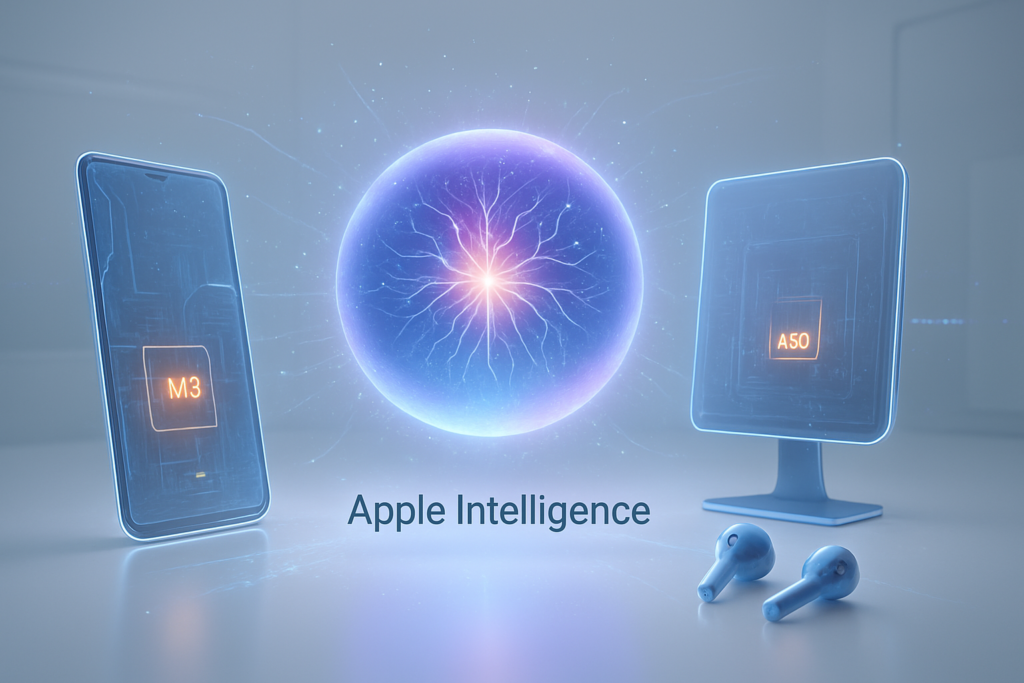
The technical backbone of the 2026 blitz is the evolution of Apple Intelligence from a set of discrete features into a unified, system-wide intelligence layer. Central to this is the rumored "Siri 2.0," which is expected to utilize a hybrid architecture. This architecture reportedly combines on-device processing for privacy-sensitive tasks with a massive expansion of Apple’s Private Cloud Compute (PCC) for complex reasoning. Industry insiders suggest that Apple has optimized its upcoming A20 Pro chip, built on a groundbreaking 2nm process, to feature a Neural Engine with four times the peak compute performance of previous generations. This allows for local execution of LLMs with billions of parameters, reducing latency and ensuring that user data never leaves the device.
Beyond the iPhone, the "HomePad"—a dedicated 7-inch smart display—is expected to debut as the first device running "homeOS." This new operating system is designed to be the central nervous system of the AI-integrated home, using Visual Intelligence to recognize family members and adjust environments automatically. Furthermore, the AirPods Pro 3 are rumored to include miniature infrared cameras. These sensors will enable "Visual Intelligence" for the ears, allowing the AI to "see" what the user sees, providing real-time navigation cues, object identification, and gesture-based controls without the need for a screen.
This approach differs significantly from existing cloud-heavy AI models from competitors. While companies like Alphabet Inc. (NASDAQ: GOOGL) and Microsoft Corp. (NASDAQ: MSFT) rely on massive data center processing, Apple is doubling down on "Edge AI." By mandating 12GB of RAM as the new baseline for all 2026 devices—including the budget-friendly iPhone 17e and a new low-cost MacBook—Apple is ensuring that its AI remains responsive and private. Initial reactions from the AI research community have been cautiously optimistic, praising Apple’s commitment to "on-device-first" architecture, though some wonder if the company can match the raw generative power of cloud-only models like OpenAI’s GPT-5.
The 2026 blitz is poised to disrupt the entire consumer electronics landscape, placing immense pressure on traditional AI labs and hardware manufacturers. For years, Google and Amazon.com Inc. (NASDAQ: AMZN) have dominated the smart home market, but Apple’s "homeOS" and the HomePad could quickly erode that lead by offering superior privacy and ecosystem integration. Companies like NVIDIA Corp. (NASDAQ: NVDA) stand to benefit from the continued demand for high-end chips used in Apple’s Private Cloud Compute centers, while Qualcomm Inc. (NASDAQ: QCOM) may face headwinds as Apple reportedly prepares to debut its first in-house 5G modem in the iPhone 18 Pro, further consolidating its vertical integration.
Major AI labs are also watching closely. Apple’s rumored partnership to white-label a "custom Gemini model" for specific high-level Siri queries suggests a strategic alliance that could sideline other LLM providers. By controlling both the hardware and the AI layer, Apple creates a "walled garden" that is increasingly difficult for third-party AI services to penetrate. This strategic advantage allows Apple to capture the entire value chain of the AI experience, from the silicon in the pocket to the software in the cloud.
Startups in the AI hardware space, such as those developing wearable AI pins or glasses, may find their market share evaporated by Apple’s integrated approach. If the AirPods Pro 3 can provide similar "visual AI" capabilities through a device millions of people already wear, the barrier to entry for new hardware players becomes nearly insurmountable. Market analysts suggest that Apple's 2026 strategy is less about being first to AI and more about being the company that successfully normalizes it for the masses.
The broader significance of the 50th Anniversary Blitz lies in the normalization of "Agentic AI." For the first time, a major tech company is moving away from chatbots that simply answer questions toward agents that perform actions. The 2026 software updates are expected to allow Siri to perform multi-step tasks across different apps—such as finding a flight confirmation in Mail, checking a calendar for conflicts, and booking an Uber—all with a single voice command. This represents a shift in the AI landscape from "generative" to "functional," where the value is found in time saved rather than text produced.
However, this transition is not without concerns. The sheer scale of Apple’s AI integration raises questions about digital dependency and the "black box" nature of algorithmic decision-making. While Apple’s focus on privacy through on-device processing and Private Cloud Compute addresses many data security fears, the potential for AI hallucinations in a system that controls home security or financial transactions remains a critical challenge. Comparisons are already being made to the launch of the original iPhone in 2007; just as that device redefined our relationship with the internet, the 2026 blitz could redefine our relationship with autonomy.
Furthermore, the environmental impact of such a massive hardware cycle cannot be ignored. While Apple has committed to carbon neutrality, the production of over 20 new AI-integrated products and the expansion of AI-specific data centers will test the company’s sustainability goals. The industry will be watching to see if Apple can balance its aggressive technological expansion with its environmental responsibilities.
Looking ahead, the 2026 blitz is just the beginning of a multi-year roadmap. Near-term developments following the April anniversary are expected to include the formal unveiling of "Apple Glass," a pair of lightweight AR spectacles that serve as an iPhone accessory, focusing on AI-driven heads-up displays. Long-term, the integration of AI into health tech—specifically rumored non-invasive blood glucose monitoring in the Apple Watch Series 12—could transform the company into a healthcare giant.
The biggest challenge on the horizon remains the "AI Reasoning Gap." While current LLMs are excellent at language, they still struggle with perfect logic and factual accuracy. Experts predict that Apple will spend the latter half of 2026 and 2027 refining its "Siri Orchestration Engine" to ensure that as the AI becomes more autonomous, it also becomes more reliable. We may also see the debut of the "iPhone Fold" or "iPhone Ultra" late in the year, providing a new form factor optimized for multi-window AI multitasking.
Apple’s 50th Anniversary Blitz is more than a celebration of the past; it is a definitive claim on the future. By launching an unprecedented 20+ AI-integrated products, Apple is signaling that the era of the "smart" device is over, and the era of the "intelligent" device has begun. The key takeaways are clear: vertical integration of silicon and software is the new gold standard, privacy is the primary competitive differentiator, and the "agentic" assistant is the next major user interface.
As we move toward the April 1st milestone, the tech world will be watching for the official "Spring Blitz" event. This moment in AI history may be remembered as the point when artificial intelligence moved out of the browser and into the fabric of everyday life. For consumers and investors alike, the coming months will reveal whether Apple’s massive bet on "Apple Intelligence" will secure its dominance for the next 50 years.
This content is intended for informational purposes only and represents analysis of current AI developments.
TokenRing AI delivers enterprise-grade solutions for multi-agent AI workflow orchestration, AI-powered development tools, and seamless remote collaboration platforms.
For more information, visit https://www.tokenring.ai/.