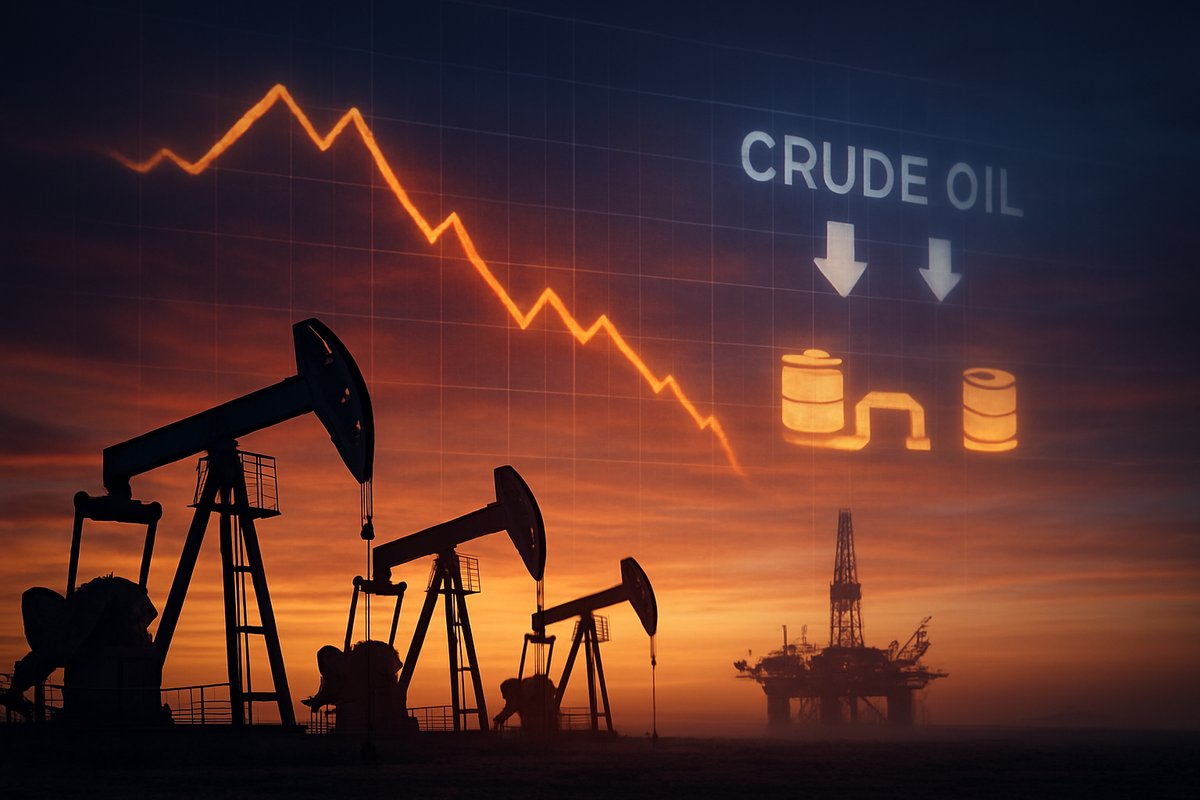
As the final quarterly reports for 2025 filter through the financial markets this January 30, 2026, a striking paradox has emerged for the titans of American energy. ExxonMobil (NYSE: XOM) and Chevron (NYSE: CVX) have both reported all-time record production levels, flooding the market with oil from the Permian Basin and the offshore waters of Guyana. Yet, despite extracting more crude than ever before, both companies saw their annual profits retreat from the heights of previous years as a global supply glut sent crude prices tumbling.
This disconnect between operational excellence and financial realization marks a pivotal moment for the industry. While the "Big Oil" narrative of 2022 and 2023 was defined by windfall profits and high energy prices, the story of late 2025 is one of disciplined efficiency. The massive investments in low-cost, high-volume regions are finally bearing fruit, but the sheer volume of this new supply—combined with a cooling global economy—has dampened the very prices these companies rely on for their bottom lines.
Record Volumes in the "Atlantic Basin Triad"
The financial results for the 2025 fiscal year, released over the past week, highlight a year of historic operational achievements. ExxonMobil (NYSE: XOM) reported a staggering full-year production record, fueled by its aggressive integration of Pioneer Natural Resources. In the fourth quarter of 2025, Exxon’s Permian Basin output surged to 1.8 million oil-equivalent barrels per day (boe/d), contributing to a full-year net income of $28.8 billion. While impressive, this profit figure represents a 14.5% decline from 2024, as the company grappled with a Brent crude price that averaged just $69 per barrel for the year—a sharp drop from the $81 average seen just twelve months prior.
Chevron (NYSE: CVX) followed a similar trajectory, finally hitting its long-sought milestone of 1 million boe/d in the Permian Basin. Following the mid-2025 closure of its $53 billion acquisition of Hess Corporation, Chevron’s global production peaked at 4.045 million boe/d in the final quarter of the year. However, the financial impact of lower "liquid realizations"—the actual price received for oil—was severe. Chevron’s full-year GAAP net income fell approximately 30% to $12.3 billion. The integration of Hess and the ramp-up in Guyana helped offset some of the pain, but the company’s international upstream earnings were hit by a 38% decline in the fourth quarter as crude prices dipped toward the low $60s.
The timeline of these events began in early 2024 and 2025 with a series of mega-mergers that consolidated the U.S. shale patch. By the time 2025 drew to a close, the increased efficiency of these combined operations began to outpace global demand. Market reactions have been mixed; while investors appreciate the continued high level of shareholder returns—Exxon and Chevron returned $37.2 billion and $27.1 billion respectively via dividends and buybacks—the focus has shifted from "growth at any cost" to "resilience at low prices."
The Winners and Losers of the Supply Surge
In this "lower-for-longer" price environment, the clear winners are the downstream segments and the end consumers. ExxonMobil’s refining division, categorized as Energy Products, proved to be a vital hedge, posting full-year earnings of $7.4 billion. This was a $3.4 billion increase over 2024, as the company took advantage of cheaper crude inputs and record refinery throughput to capture healthy margins on gasoline and diesel. Consumers have also felt the relief at the pump, with lower crude prices translating to the most affordable fuel prices since the pre-pandemic era.
Conversely, the losers in this scenario are the smaller, independent producers who lack the integrated refining scale of the majors. With Brent crude averaging $63.73 in the fourth quarter and analysts at major banks forecasting a drop to $56 in 2026, many producers with higher break-even costs in maturing basins are facing an existential squeeze. Even for the giants, the chemical segment has become a drag on performance. Exxon’s Chemical Products segment recorded a $281 million loss in the fourth quarter of 2025, as a global oversupply of plastics and high seasonal costs eroded margins.
European rivals such as Shell (NYSE: SHEL) and BP (NYSE: BP) have also found themselves on the losing end of this price shift. Unlike their American counterparts, who have doubled down on oil and gas, the European majors have faced a "fundamental reset," leaning heavily on their Liquefied Natural Gas (LNG) and trading units to stay afloat as their oil-driven profits softened significantly in late 2025.
A Global Shift in the Energy Balance
The significance of these record production levels extends far beyond a single earnings report. We are witnessing a shift in the global energy balance of power. The surge in production from the so-called "Atlantic Basin Triad"—the U.S., Brazil, and Guyana—has effectively neutralized the ability of OPEC+ to dictate prices through production cuts. As Exxon and Chevron bring more "advantaged" (low-cost) barrels to market, they are forcing a competitive environment where only the most efficient survive.
This event fits into a broader industry trend of "high-grading" portfolios. Both Exxon and Chevron have stated they can remain profitable in the Permian and Guyana even if oil prices fall to $35 per barrel. This historical precedent is reminiscent of the 2014-2016 oil price crash, but with a key difference: the majors are now leaner, more technologically advanced, and far more consolidated.
Regulatory and policy implications are also looming. As the supply glut persists, there is increasing pressure on the U.S. government to address the long-term sustainability of the shale boom. Meanwhile, the environmental movement continues to point to these record production figures as a sign that the transition away from fossil fuels is moving slower than required by international climate goals, despite the lower profitability of the sector.
The 2026 Outlook: Managing the Glut
Looking ahead to the remainder of 2026, the primary challenge for the energy sector will be managing this self-inflicted surplus. Short-term possibilities include a further "plateauing" of production growth as companies prioritize cash flow over volume. Chevron has already signaled a shift toward a plateau strategy in the Permian to protect its dividend in a $50-$60 oil environment.
Strategic pivots may involve a further retreat from the chemical sector or an acceleration of carbon capture and hydrogen investments as a way to diversify revenue streams away from volatile commodity prices. The market may also see another wave of smaller-scale consolidation as struggling mid-cap producers seek the safety of larger balance sheets. The primary risk remains a further global economic slowdown, which could push oil prices into the $40s, testing the "low-cost" claims of even the most efficient Permian operators.
Summary and Investor Takeaways
The earnings reports of early 2026 have confirmed a new reality for the oil market: production efficiency has outpaced global demand. ExxonMobil and Chevron have proven they can grow volumes to historic levels, but they remain at the mercy of the global commodity cycle. The key takeaways for investors are:
- Resilience through Integration: Exxon’s refining strength highlights the value of the integrated model in a low-price environment.
- Low-Cost Dominance: Guyana and the Permian Basin remain the most important assets in the global energy landscape, providing a floor for the majors' profitability.
- Dividend Safety: Despite lower earnings, the massive cash piles and disciplined capital spending mean that shareholder returns remain the top priority for the foreseeable future.
Moving forward, investors should watch for the impact of the $56/bbl price forecasts for the rest of 2026 and whether OPEC+ will attempt a "shock and awe" production cut to reclaim market control. For now, the "Paradox of Plenty" remains the defining theme of the energy sector.
This content is intended for informational purposes only and is not financial advice.