The financial markets are closing out 2025 in a state of high-octane paradox. The iShares Core S&P 500 ETF (NYSE Arca: IVV), the massive exchange-traded fund that serves as a cornerstone for millions of retirement portfolios, is currently navigating a treacherous "Scrooge" dip following a year of relentless record-breaking. After reaching a breathtaking all-time high in mid-December, the index has retreated as institutional investors engage in a massive "Great De-Risking" exercise.
This late-December volatility is more than just a seasonal correction; it is a fundamental reassessment of the "AI Mega Force" that propelled markets throughout the year. As the calendar turns, the immediate implications are clear: the easy gains of 2025 are being clawed back by a combination of technical resistance at the 7,000 millennium mark and a sobering reality check regarding global trade policy and domestic fiscal stability.
A Year of Records Meets the 'Scrooge' Dip
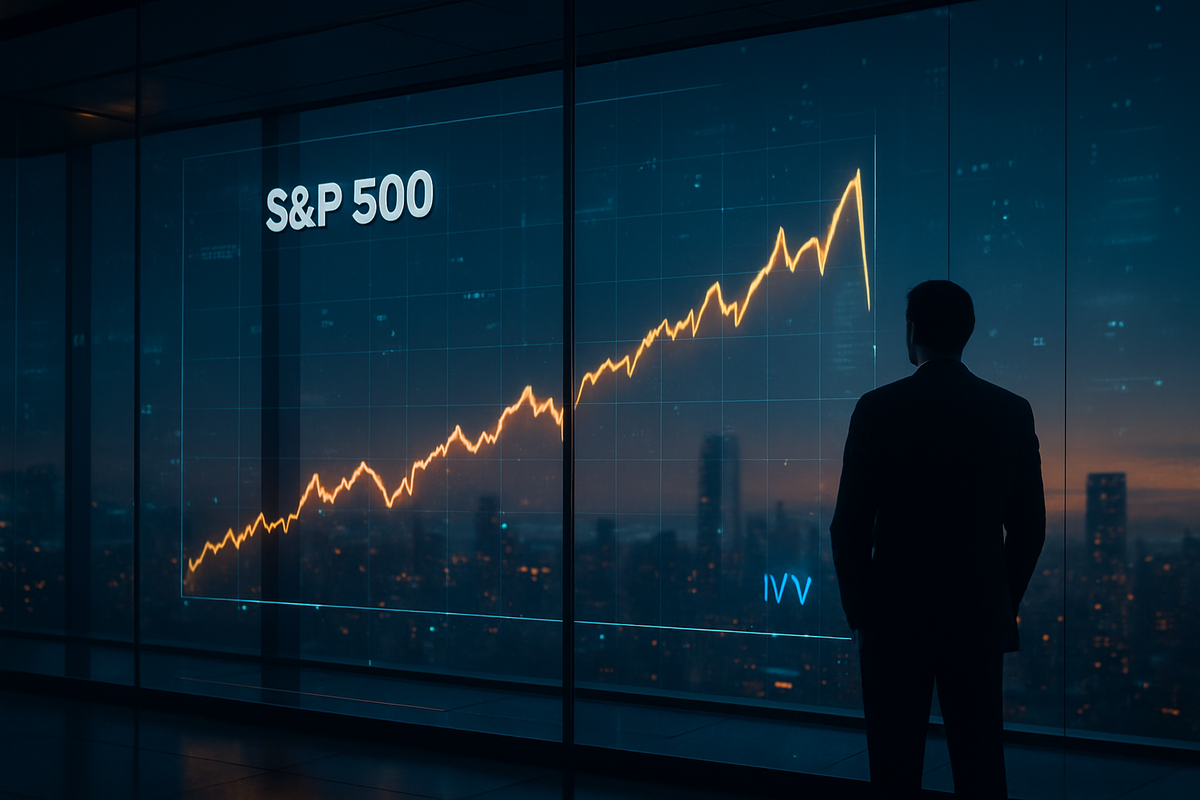
The trajectory of the iShares Core S&P 500 ETF (NYSE Arca: IVV) in 2025 was nothing short of historic. Driven by a concentrated rally in mega-cap technology and a resilient U.S. consumer, the fund delivered a total return of approximately 18% for the year. The S&P 500 hit its ultimate peak on December 17, 2025, reaching an intraday high of 6,952.84. This surge was catalyzed by the Federal Reserve’s December 10 decision to deliver its third consecutive 25-basis-point rate cut, bringing the federal funds target range down to 3.50%–3.75%.
However, the "Santa Claus Rally" that many expected to carry the index over the 7,000 threshold was abruptly derailed. Following a record Christmas Eve close, the market entered a sharp retreat on December 29 and 30. This "Scrooge" dip was triggered by the sudden release of delayed economic data following a historic 43-day government shutdown that had paralyzed Washington through much of the autumn. When the data finally hit, it revealed a 1.5% hit to fourth-quarter GDP growth, catching many institutional models off-guard.
The timeline of this reversal was accelerated by technical factors. As the S&P 500 approached the 7,000 level, it encountered a massive "call-wall" of options. Market makers, forced to remain delta-neutral, began selling underlying shares as the index failed to break through, creating a self-reinforcing downward spiral. This was further compounded by the cumulative weight of the 10% universal "Liberation Day" tariffs, which were enacted in April 2025. While the market initially shrugged them off, the year-end realization of their impact on 2026 corporate margins sparked a wave of defensive rotation.
The Winners and Losers of the De-Risking Phase
The December dip has created a stark divide between the "AI Infrastructure" plays that dominated the first half of the year and the defensive "Quality" plays that are now finding favor. Nvidia Corp. (NASDAQ: NVDA), which reached a staggering $5 trillion valuation in October, became a primary victim of year-end profit-taking. Shares of the chip giant fell nearly 2% in the final days of December as investors questioned the ROI on its $5 billion stake in Intel Corp. (NASDAQ: INTC) and its aggressive licensing deals. Similarly, Microsoft Corp. (NASDAQ: MSFT) saw its momentum stall as the market shifted toward "AI Realism," demanding more tangible evidence of enterprise productivity gains.
In contrast, Alphabet Inc. (NASDAQ: GOOGL) emerged as a rare winner among the tech titans. Finishing the year up over 60%, Alphabet benefited from the successful rollout of Gemini 3.0 and a massive $5 billion vote of confidence from Berkshire Hathaway Inc. (NYSE: BRK.B). Furthermore, a major legal victory regarding its Chrome browser removed a significant regulatory overhang that had plagued the stock for years.
The true "winners" of the late-December dip, however, were the defensive stalwarts. The Utilities Select Sector SPDR Fund (NYSE Arca: XLU) hit fresh multi-month highs as investors sought shelter in regulated earnings. Healthcare giants like UnitedHealth Group Inc. (NYSE: UNH) and Johnson & Johnson (NYSE: JNJ) also saw significant inflows, acting as the primary stabilizers for the Dow Jones Industrial Average. Even BlackRock, Inc. (NYSE: BLK), the manager of the IVV fund itself, felt the pressure; its stock traded roughly 14% below its October highs, as investors moved away from high-multiple financial asset managers despite the firm's record $13.4 trillion in assets under management.
Institutional Shifts and the 'AI Realism' Trend
The current market environment reflects a broader shift in institutional positioning. Throughout 2025, IVV saw over $74 billion in net inflows, but the final week of December witnessed a sharp $16 billion reversal. Institutional heavyweights, including Bridgewater Associates, have reportedly been trimming their "Magnificent Seven" stakes. This isn't necessarily a vote of no confidence in technology, but rather a strategic rebalancing to harvest gains and account for a forward P/E ratio that has stretched to a demanding 22.5x.
This event fits into a larger industry trend of "Passive-Plus" management. While IVV remains a passive index fund, the behavior of its largest holders suggests a more active oversight of index exposure. BlackRock analysts have noted that the "Great De-Risking" is partially a result of model portfolios shifting toward thematic "Buffer ETFs" to protect against the 2026 tariff overhang. This move mirrors historical precedents, such as the late-2018 volatility, where trade tensions and Fed uncertainty converged to disrupt an otherwise strong year.
Furthermore, the 43-day government shutdown has left a lasting scar on market transparency. The "blind spot" created by the lack of timely data in October and November has forced institutions to rely more heavily on proprietary "now-casting" models. This reliance on private data over public statistics has increased market fragmentation, as different institutions react to different data sets, contributing to the erratic price action seen in the final trading sessions of 2025.
The 2026 Outlook: Strategic Pivots and Margin Pressure
As we look toward 2026, the market faces a "tariff overhang" that could redefine corporate earnings. The 10% universal tariffs are no longer a theoretical risk; they are a baked-in cost that hardware manufacturers and global retailers must now pass on to consumers. Companies like Apple Inc. (NASDAQ: AAPL), which has already struggled with market share losses in China throughout 2025, may find themselves forced into strategic pivots, such as further diversifying supply chains into India and Vietnam or accepting lower margins to maintain volume.
In the short term, the market will likely remain range-bound between the 6,700 support level and the 7,000 resistance level. A key catalyst to watch will be the Q4 earnings season in January 2026. If the "AI Realism" trend continues, any company that fails to show a clear path to AI-driven revenue will likely face further valuation compression. However, this also creates an opportunity for small-cap stocks, which have lagged significantly in 2025. If the Fed continues its cutting cycle in early 2026, the Russell 2000 could finally see the "catch-up" trade that bulls have been predicting for years.
Conclusion: A Guarded Path Forward
The year 2025 will be remembered as the year the S&P 500 flirted with the 7,000 milestone, only to be pulled back by the gravity of fiscal and trade realities. The iShares Core S&P 500 ETF (NYSE Arca: IVV) remains the primary vehicle for U.S. equity exposure, but its recent volatility serves as a reminder that even the most robust rallies are susceptible to year-end "housekeeping" by institutional giants.
Moving forward, investors should keep a close eye on the Federal Reserve’s "hawkish cuts" and the potential for a pause in the easing cycle. The primary takeaway from the December dip is that the market has transitioned from a "growth at any price" phase to one of "earnings quality and margin resilience." For the coming months, the focus will shift from how high the index can go to how well companies can defend their bottom lines against the twin pressures of sticky inflation and trade barriers. The 7,000 mark remains the ultimate prize, but the path to reaching it in 2026 will likely be far more selective than the broad-based surge of the past year.
This content is intended for informational purposes only and is not financial advice.