As 2025 draws to a close, the global zirconium market is undergoing a fundamental structural shift, moving away from its traditional reliance on the construction-led ceramics industry and toward a high-growth future anchored by the nuclear energy renaissance and advanced aerospace coatings. Long considered a "quiet" mineral tied to the ebbs and flows of the Chinese property market, zirconium has emerged as a critical strategic asset in the race for decarbonization and high-performance manufacturing.
The market dynamics of 2025 have been defined by a stark divergence: while standard-grade zircon remains pressured by a sluggish recovery in traditional tiling and glazes, premium-grade zirconium and high-purity zirconia are seeing unprecedented demand. This shift is driven by a global surge in nuclear reactor construction—including the first commercial waves of Small Modular Reactors (SMRs)—and the critical role of zirconium-based thermal barrier coatings in the next generation of aerospace engines. As of late December 2025, premium zircon prices have stabilized at a robust $1,800 to $2,150 per metric ton, signaling a new "price floor" supported by energy and defense applications.
The 2025 Tipping Point: From Ceramics to Critical Energy Infrastructure
The transformation of the zirconium market accelerated throughout 2025, marked by a series of supply-side constraints and a massive uptick in nuclear-grade demand. Historically, nearly 50% of zirconium demand originated from the ceramics sector, particularly in China. However, the continued stagnation of Chinese real estate throughout 2024 and 2025 forced major miners to pivot. The "tipping point" arrived in mid-2025 when China’s own nuclear expansion program alone consumed over 2,700 tons of zirconium materials for new reactor builds, effectively absorbing the surplus created by the housing slump.
The timeline leading to this moment began in early 2024, when the European Union officially designated zirconium as a "Critical Raw Material." This was followed by the U.S. implementing a 10% blanket tariff on Australian zircon exports in April 2025, a move that reshuffled global supply chains and incentivized domestic processing. By the third quarter of 2025, the industry witnessed a significant "decoupling" as Western aerospace firms and nuclear utilities began signing long-term off-take agreements directly with miners to bypass Chinese processing dominance.
Key players have responded with aggressive strategic shifts. In Australia, the commissioning of the Balranald project by Iluka Resources (ASX:ILU) in late 2025 has become a focal point for the industry. The project is designed specifically to target high-grade zircon and rare earths, catering to the "quality over quantity" demand profile that now dominates the market. Meanwhile, the aerospace sector’s hunger for Thermal Barrier Coatings (TBCs) has reached a fever pitch, with jet engine manufacturers requiring higher operating temperatures—achievable only through advanced zirconia-based coatings—to meet new fuel-efficiency standards.
Corporate Leaders: Navigating the High-Purity Pivot
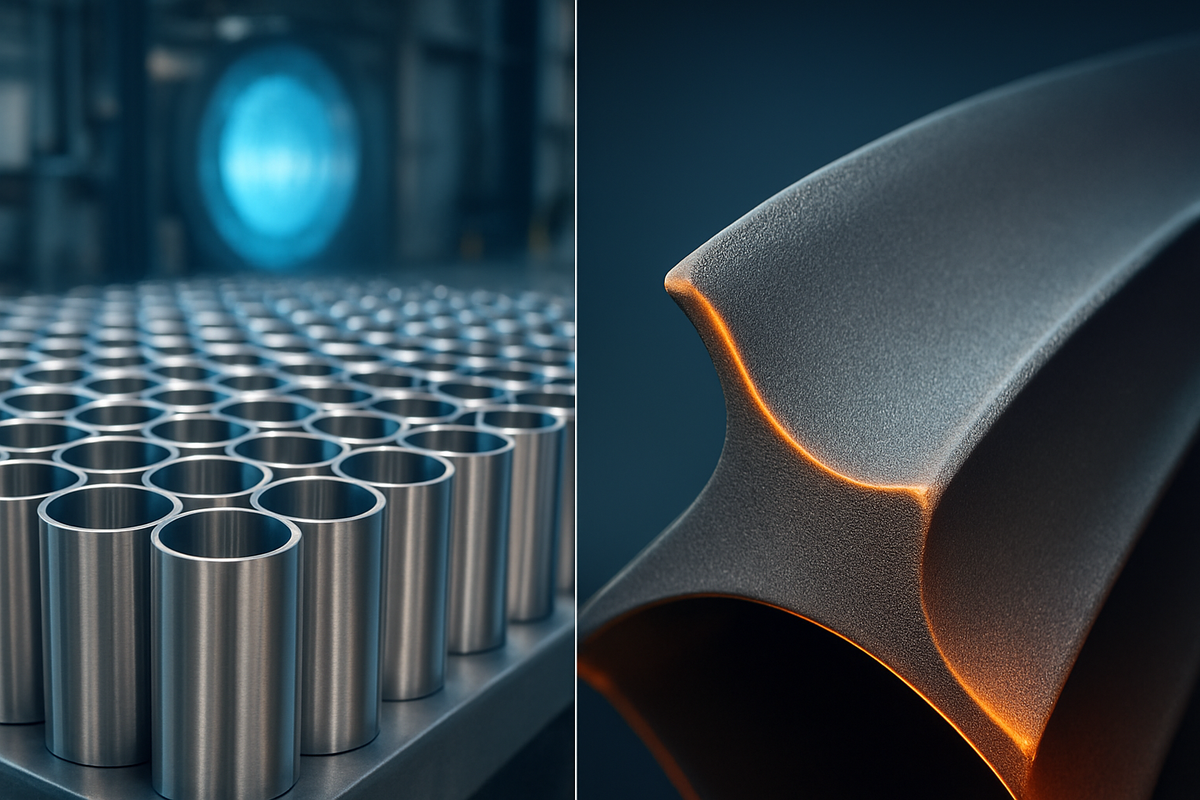
The shift in market dynamics has created a clear divide between diversified miners and specialized processors. ATI Inc. (NYSE: ATI) has emerged as a primary winner in this new landscape. As one of the few Western companies with fully integrated capabilities for producing nuclear-grade zirconium sponge, ATI has reported record backlogs in its Advanced Alloys & Solutions segment. The company’s "Zircaloy" products are now the industry standard for the fuel cladding required by both traditional reactors and the emerging SMR market.
On the mining side, Iluka Resources (ASX:ILU) has successfully transitioned from a volume-heavy producer to a strategic mineral powerhouse. By focusing on high-purity outputs and onshoring more of its processing, Iluka has mitigated the impact of trade barriers that have hampered competitors. Conversely, Tronox (NYSE: TROX) has faced a more complex year; while its zircon revenues rose due to volume in 2024, the company had to adjust its 2025 guidance downward in the face of aggressive competitive activity and inventory liquidations in the standard-grade market.
Specialized chemical players like Luxfer Holdings PLC (NYSE: LXFR) are also reaping the rewards of the zirconium renaissance. Through its Luxfer MEL Technologies division, the company has solidified its position in the high-margin market for zirconium-based catalysts and medical-grade zirconia. Similarly, Australian Strategic Materials (ASX:ASM) has gained significant traction with its "mine-to-metal" strategy, utilizing its Korean Metals Plant to produce high-purity zirconium metal for the green energy sector, effectively providing a non-Chinese supply route for critical tech industries.
Wider Significance: Geopolitics and the Green Transition
The zirconium market’s evolution is a microcosm of the broader "Critical Minerals" trend currently reshaping global trade. The event signifies a move toward "friend-shoring" and the vertical integration of supply chains. As the U.S. and EU seek to reduce their dependence on Chinese processing—which still accounts for approximately 90% of downstream zirconium chemicals—the push for domestic refining has become a matter of national security. This is particularly evident in the nuclear sector, where Cameco (NYSE: CCJ) and Brookfield Renewable Partners (NYSE: BEP), through their ownership of Westinghouse, have been securing zirconium supply lines to ensure the viability of their reactor deployments.
Historically, zirconium was viewed as a secondary byproduct of titanium mining. However, the 2025 market shift mirrors the historical precedent of lithium or rare earths, where a once-commodity mineral becomes a high-value strategic asset due to a technological leap. In this case, the leap is dual-pronged: the "Nuclear Renaissance" required for carbon-neutral baseload power and the "Aerospace Revolution" demanding higher engine efficiencies. Regulatory policies, such as the EU’s Critical Raw Materials Act, are now providing the subsidies and fast-tracked permitting necessary for new zirconium refineries to break ground in Australia and North America.
What Comes Next: The Solid-State Battery Frontier
Looking toward 2026 and 2027, the zirconium market is bracing for a potential supply deficit. Analysts project a global shortage of 50,000 tons of zircon concentrate as major Australian mines, including some operated by Rio Tinto (NYSE: RIO) and Kenmare Resources (LSE:KMR), face "depletion cliffs" at their mature sites. This looming shortage is expected to keep upward pressure on prices, even if the ceramics sector remains soft.
The next major catalyst for the market is the commercialization of Solid-State Batteries (SSBs). Zirconia is a key component in several leading SSB architectures, serving as a solid electrolyte. Global demand for zirconia from the battery sector is expected to triple by 2026 as automakers like Toyota and Volkswagen move from pilot plants to full-scale production. This represents a "third wave" of demand that could permanently decouple zirconium from the construction cycle, transforming it into a pure-play energy transition metal.
Market Wrap-Up: A New Era for Zirconium
The zirconium market of late 2025 is unrecognizable compared to the market of five years ago. It has successfully shed its "construction-only" label to become a cornerstone of the global energy and aerospace sectors. The key takeaway for the market is the increasing value of purity; while the world has enough standard zircon for tiles, it faces a looming crisis in the supply of the high-purity materials required for nuclear fuel and advanced coatings.
Moving forward, investors should closely monitor the commissioning of new refining capacity in Australia and the progress of SSB commercialization. The ability of companies like ATI Inc. (NYSE: ATI) and Australian Strategic Materials (ASX:ASM) to scale their high-purity output will be the primary determinant of their success. As we head into 2026, zirconium is no longer just a mineral to watch—it is a mineral that the modern industrial world cannot function without.
This content is intended for informational purposes only and is not financial advice.