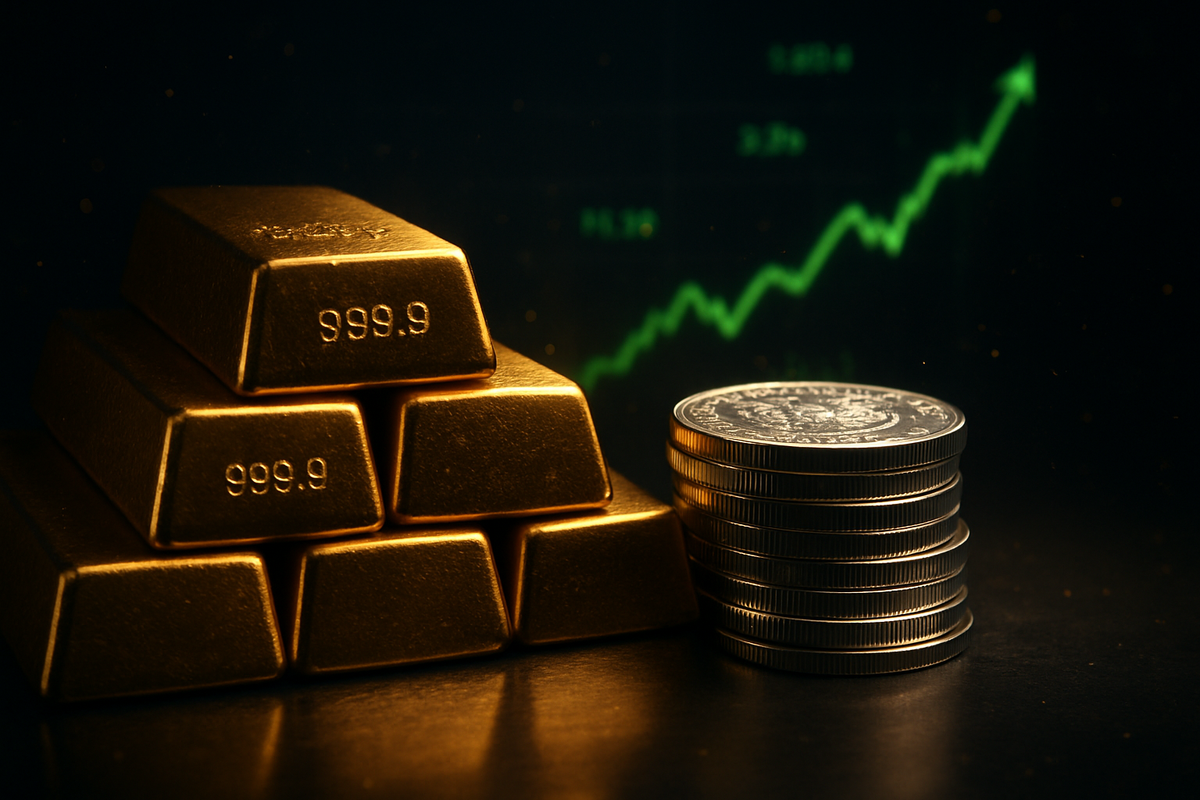
In a trading session that will be etched into the annals of financial history, precious metals have staged a breathtaking ascent, shattering long-held psychological barriers and redefining the global investment landscape. As of December 22, 2025, gold has surged past the $4,400 per ounce mark, a level once dismissed as a fringe forecast, while silver is aggressively charging toward $70, its highest valuation in modern history. This rally is not merely a localized spike but a systemic repricing of hard assets against a backdrop of shifting geopolitical alliances and a fundamental erosion of confidence in traditional fiat currencies.
The immediate implications are profound. Global bond markets are experiencing heightened volatility as investors pivot toward the "safe haven" of bullion, while central banks—particularly those in emerging markets—continue to accelerate their gold accumulation at a record pace. This surge has caught many institutional desks off guard, triggering a massive wave of short-covering that has only added fuel to the upward trajectory. For the average investor, the rally signifies a paradigm shift where the "inflation hedge" narrative has evolved into a broader "currency debasement" play, fundamentally altering portfolio allocation strategies worldwide.
A Perfect Storm: The Path to $4,400 Gold
The road to today’s historic high began in early 2024, but the momentum reached a fever pitch throughout 2025. A convergence of three primary catalysts drove this "Golden Renaissance." First, the Federal Reserve’s pivot toward aggressive monetary easing in late 2024, aimed at averting a deepening domestic recession, resulted in deeply negative real yields. As the U.S. dollar’s purchasing power faced scrutiny, capital flooded into non-yielding assets. Second, the "De-dollarization" trend moved from theory to reality as the BRICS+ nations launched a gold-backed settlement mechanism, creating a massive new source of structural demand that effectively put a "mechanical floor" under the price.
Timeline events leading to this moment include the mid-2025 energy crisis sparked by the U.S. oil blockade on Venezuela, which sent shockwaves through global supply chains and reignited "sticky" inflation concerns. By October 2025, gold had already breached $3,500, and the final push to $4,400 was catalyzed by a series of high-profile bank failures in the Eurozone, which drove a flight to quality unlike anything seen since the 2008 financial crisis. Key players in this rally include not only traditional institutional giants like BlackRock and Vanguard but also a new generation of sovereign wealth funds from the Middle East and Southeast Asia, who have replaced U.S. Treasuries with physical bullion in their core reserves.
Initial market reactions have been a mix of euphoria and panic. While gold bugs celebrate a "generational win," industrial users of precious metals—particularly in the high-tech and green energy sectors—are scrambling to secure supply. The Chicago Mercantile Exchange (CME) has had to raise margin requirements multiple times in the last 48 hours to curb excessive speculation, yet the buying pressure remains relentless as silver nears the $70 threshold, driven by its dual role as a monetary asset and a critical industrial mineral.
Winners and Losers in the New Metal Standard
The primary beneficiaries of this rally are the major mining houses, which are currently enjoying the widest profit margins in the history of the industry. Newmont Corporation (NYSE: NEM), the world's largest gold producer, has seen its stock price double in the last twelve months as its All-In Sustaining Costs (AISC) remained relatively stable while the spot price of gold skyrocketed. Similarly, Barrick Gold (NYSE: GOLD) has capitalized on the rally by fast-tracking its Tier-1 expansion projects in Nevada and Africa, reporting record-breaking free cash flow that has allowed for unprecedented special dividends.
In the silver space, the impact is even more pronounced. Pan American Silver (NYSE: PAAS) and Hecla Mining (NYSE: HL) have emerged as top performers, with Hecla’s stock price tripling as it ramps up production at its high-grade Keno Hill and Lucky Friday mines. These companies are no longer just miners; they have become cash-flow machines, providing investors with 2x to 3x leverage on the underlying metal prices. Streaming and royalty companies like Wheaton Precious Metals (NYSE: WPM) and Franco-Nevada (NYSE: FNV) have also won big, benefiting from the price surge without the direct operational risks of mining, making them favorites for institutional portfolios seeking lower-volatility exposure.
Conversely, the "losers" in this scenario are the industrial sectors that rely heavily on silver. The solar photovoltaic (PV) industry, which accounts for a significant portion of global silver demand, is facing a severe margin squeeze. Manufacturers of electric vehicles and AI-driven data centers are also feeling the pinch, as the cost of silver-coated components has risen by over 150% in the past year. Furthermore, traditional banking institutions that held large short positions in the futures markets are facing multi-billion dollar losses, leading to concerns about systemic counterparty risk within the precious metals derivatives market.
The Wider Significance: A Shift in the Global Order
This rally is more than a simple commodity boom; it represents a fundamental challenge to the post-Bretton Woods financial system. The ascent of gold to $4,400 suggests that the market is increasingly pricing in a "multipolar" monetary future where the U.S. dollar is no longer the undisputed king. This event fits into a broader trend of "economic sovereignization," where nations are prioritizing tangible assets over digital or debt-based promises. The historical precedent most often cited by analysts today is the 1970s bull market, but with a critical difference: the current move is supported by a much larger and more diverse global buyer base, including retail investors in China and India who are using digital gold apps to bypass traditional capital controls.
The ripple effects are being felt across all asset classes. As gold and silver drain liquidity from the equity and bond markets, we are seeing a "re-rating" of value. Competitors in the "store of value" space, such as Bitcoin and other cryptocurrencies, have also seen gains, but the physical nature of gold has given it the edge during times of geopolitical kinetic conflict. Regulatory implications are also emerging, as Western governments contemplate "windfall taxes" on mining companies or restrictions on the private export of bullion to protect national reserves—moves that would have been unthinkable just two years ago.
What Comes Next: The Road to $5,000 and Beyond
In the short term, a period of consolidation is likely. After such a vertical move, many early investors will be tempted to take profits, which could lead to sharp, albeit temporary, pullbacks. However, the long-term outlook remains overwhelmingly bullish. Analysts at major investment banks are already revising their 2026 targets, with some projecting gold could test $5,000 and silver could breach $100 if the structural supply deficit in silver is not addressed. The "strategic pivot" for many investors will be moving from speculative positions into long-term physical holdings or high-dividend-paying mining stocks.
The market will also be watching for potential "supply-side" responses. While high prices usually encourage more mining, the lead times for new projects are measured in years, not months. This means the supply-demand imbalance is likely to persist through the end of the decade. We may also see a surge in M&A activity, as larger miners use their inflated stock prices to acquire smaller explorers with proven reserves. The primary challenge for the market will be navigating the potential for increased government intervention as precious metals become a matter of national security.
A New Era for Hard Assets
The shattering of the $4,400 gold mark and the charge toward $70 silver represent a watershed moment for global finance. The key takeaway is that the "old rules" of the market—where gold was a sleepy asset relegated to the back of the portfolio—are officially dead. We have entered an era where hard assets are the primary drivers of wealth preservation and capital growth. Moving forward, the market will be characterized by higher volatility, deeper geopolitical integration, and a renewed focus on physical delivery over paper contracts.
For investors, the coming months will require a blend of vigilance and discipline. While the trend is clearly upward, the path will be volatile. Watching the actions of the Federal Reserve and the central banks of the "Global South" will be critical, as will monitoring the industrial demand metrics for silver. As we head into 2026, the question is no longer whether gold and silver belong in a portfolio, but rather how much of a portfolio can afford to be without them. The "Golden Renaissance" is here, and its impact will be felt for decades to come.
This content is intended for informational purposes only and is not financial advice.